
3 Things Most Families Don't Know About Our Costa Rica Middle School Trip
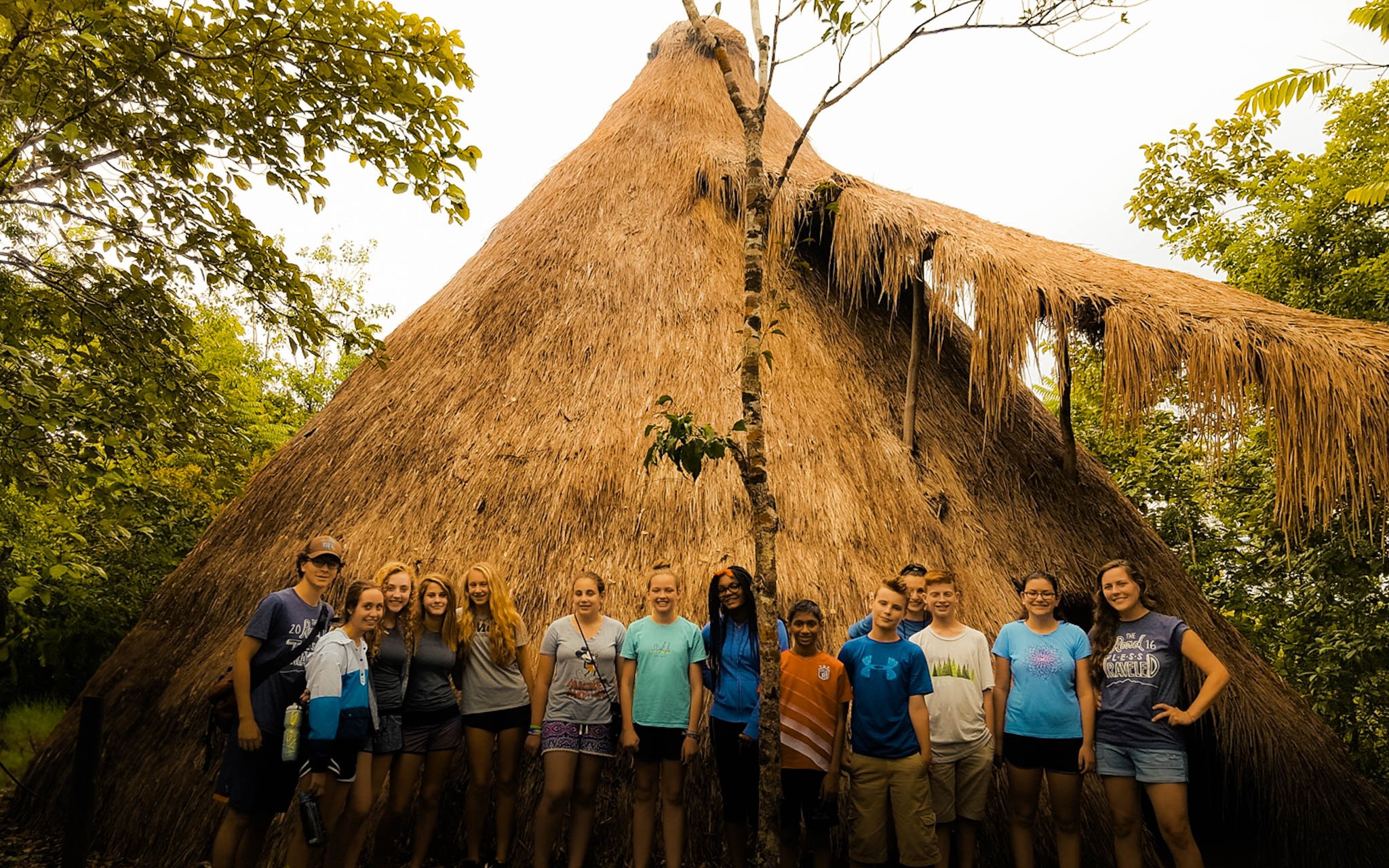
Our Costa Rica middle school trip starts in San José, then moves into rainforest, community service, river travel, and the Caribbean coast.
Students hike through Guayabo National Monument, spend several days working with a rural community near Turrialba, raft the Pacuare River, zipline through the canopy, surf, kayak through mangroves, hike Cahuita National Park, and visit a Bribri Indigenous community to learn about cacao and chocolate.
It is a full 14 days, built for students completing grades 6 to 8.
Here are three things families may not know before reading the full itinerary.
1. The service stretch is several days in one community
Days 3 to 7 are based near Turrialba, where students work on community service projects alongside local residents.
The projects depend on what the community needs at the time. Expect possibilities like building small structures, compost systems, gardening, recycling efforts, painting fences, hauling compost, digging trenches, and helping improve community spaces.
This is also where the trip slows down enough for students to understand where they are. In between projects, the group may hike, play games, spend time with local kids, and share meals prepared with help from Costa Rican hosts.
That is different from visiting a service site for a single afternoon.
Students are there for several days. They sleep nearby, eat local meals, help with the work, and begin to understand the routines of the place.
2. The Pacuare River is a real middle school adventure
On Day 8, the group launches onto the Pacuare River for a rafting journey through Class II to III rapids.
Students paddle through rainforest, waterfalls, and deep canyons, then spend the night at a riverside jungle camp. The next day includes breakfast at camp, a hike to a hidden jungle waterfall, a swim in clear pools, and ziplining through the rainforest canopy.
This stretch is active, but it is designed for middle school students. Leaders and outfitters guide the river experience, and students learn how to listen, paddle together, and move as part of a raft crew.
The overnight river camp is part of what makes the trip feel different. Students are not just rafting for a few hours and leaving. They sleep in the rainforest and wake up still inside the river corridor.
3. The trip connects rainforest, coast, and Bribri culture
Costa Rica is not one landscape, and this itinerary shows students several of them.
Day 2 is Guayabo National Monument, an archaeological site surrounded by rainforest. Students hike past stone roads, petroglyphs, and aqueducts while learning about one of Costa Rica’s ancient civilizations.
After the river section, the group travels east to the Caribbean coast near Puerto Viejo. Days 11 and 12 include Cahuita National Park, swimming in the Caribbean Sea, beginner-friendly surfing, and kayaking upriver through mangroves and jungle rivers while looking and listening for wildlife like howler monkeys and colorful birds.
Day 13 brings students to a Bribri Indigenous community, where they learn how cacao is used in traditional ways and participate in a chocolate-making demonstration. That evening, the group returns to San José for the final banquet.
Day 14 is departure.
What families should know before applying
Trip length and grade range. This is a 14-day trip for middle school students completing grades 6 to 8.
Service hours. 15 to 25 hours of service work.
Accommodations. Students stay in a mix of rustic lodges, hotels, and raised jungle platform tents. The group spends 5 nights in simple hotels in San José and on the Caribbean coast, 6 nights in a rustic house near the Turrialba community, and 2 nights at riverside jungle campsites in platform tents.
Bathrooms and showers. Students share rooms or tents based on gender and comfort. Expect that flush toilets and short showers are available daily.
Food. Most meals are made by local community members using regional ingredients like rice, beans, tropical fruits, vegetables, plantains, grilled chicken, veggie stir-fries, and gallo pinto. Students often help prepare meals during the community stay and jungle adventure.
Service. Projects may include building small structures, compost systems, gardening, recycling, painting fences, hauling compost, digging trenches, or other work that supports local community spaces and environmental stewardship.
Water activities. The itinerary includes rafting, swimming, surfing, and kayaking. Students should be comfortable spending time in and around water and ready to listen closely to guides and leaders.
Health and travel preparation. Trip insurance is required for international programs. Expect that anti-malarial medication is recommended because some parts of Costa Rica carry a risk of malaria transmission. Families should speak with a physician or travel health specialist and review current CDC guidance before departure.
Passport. A valid passport is required and must not expire within 6 months of the return date.
Packing. RLT recommends one checked soft duffel bag, not a rolling suitcase, plus a small carry-on backpack. Students bring personal clothing, toiletries, and individual gear. RLT provides group gear, including tents, cooking equipment, and specialized activity equipment needed for the trip.
Phones. RLT programs are phone-free. Leaders collect phones and personal electronics on Day 1 and return them at the end of the trip. Digital cameras and GoPros are welcome as long as they do not connect to the internet.
Questions families often ask
Is this trip built for middle school students?
Yes. The trip is designed for students completing grades 6 to 8. It includes active days, shared rooms or tents, group meals, service work, travel without phones, and leader support throughout.
Does my student need Spanish experience?
No language is required for our Costa Rica Middle School trip. The itinerary includes cultural exchange and time with local residents, so students should be open to listening, learning, and trying.
How does the rafting work?
The trip includes a Pacuare River rafting journey through Class II to III rapids. Students paddle with instruction and support, camp at a riverside jungle site, and continue the river experience the next day with waterfall hiking and ziplining.
Where do students sleep?
Students stay in simple hotels, a rustic house near the Turrialba community, and raised platform tents at riverside jungle campsites.
What if my student is nervous about ziplining or water activities?
That is worth talking through before enrollment. The itinerary includes rafting, swimming, surfing, kayaking, and ziplining, so water comfort and readiness for active days matter. We can help you think through fit.
How to talk to your student about this trip
Before they go, you might say:
“You’ll spend two weeks in Costa Rica with a middle school group. You’ll do service work near Turrialba, hike through an archaeological site, raft the Pacuare River, sleep at a jungle river camp, zipline, surf, kayak through mangroves, visit Cahuita National Park, and learn about cacao with a Bribri community. You’ll be off your phone and helping with group responsibilities.”
After they come home, ask:
“What did your group work on during service?”
“What did you see at Guayabo?”
“What was the Pacuare River like?”
“What did you learn during the Bribri visit?”
Explore the Costa Rica middle school trip
For dates, tuition, itinerary, accommodations, packing details, paperwork, and the technology policy, see the full Costa Rica Middle School itinerary.