3 Things Most Families Don’t Know About Our Morocco Trip
Morocco: Desert Nights is a 16-day high school trip for students completing grades 9 to 12.
The trip moves through Marrakech, the High Atlas Mountains, Aït Benhaddou, the Dades Gorges, the Sahara, Ouarzazate, and Essaouira. Students spend several days in an Amazigh village, work on service projects designed with local residents, ride camels into the Sahara, take a Moroccan cooking class, meet Moroccan teens, learn Islamic calligraphy, and surf on the Atlantic coast.
Here are three things families may not know before reading the full itinerary.
1. The High Atlas village stretch is the center of the trip
After arrival in Marrakech, the group travels into the High Atlas Mountains.
Day 3 brings students to an Amazigh village, where they are welcomed by local hosts and get their first glimpse of rural Morocco.
Days 4 to 6 are service and cultural immersion days. Each morning begins with a language lesson over breakfast. Then the group works on service projects designed in collaboration with local residents. The work may include light construction, small-scale farming, or youth programs.
Evenings include shared meals and conversation with community members.
That timing matters.
Students do not visit the village for one afternoon and leave. They spend several days there, learning the rhythm of the place, helping with projects shaped by local priorities, and sharing meals with the people hosting them.
The Morocco trip includes 10 to 20 service hours.
2. The Sahara is part of a changing landscape, not the whole story
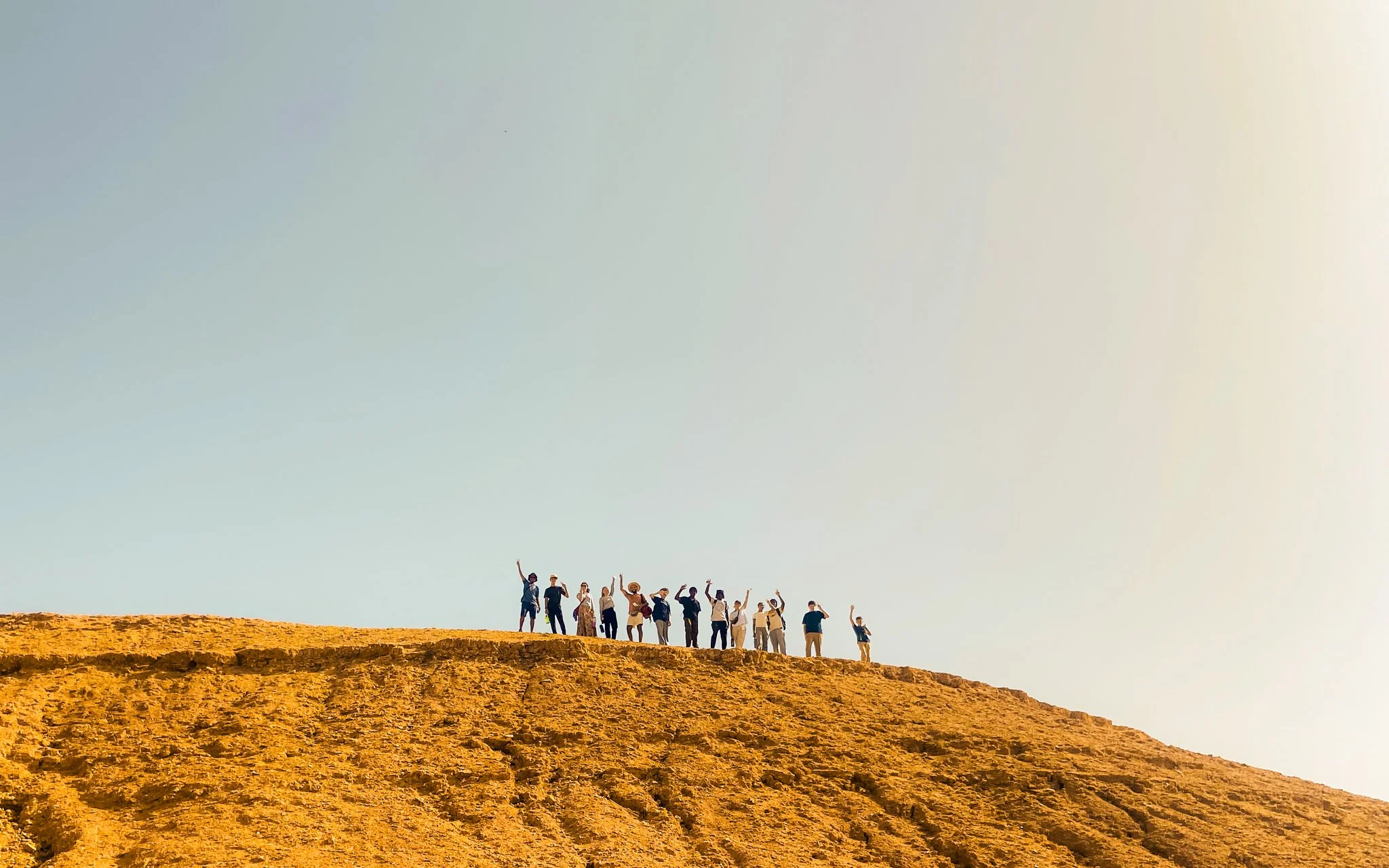
Day 9 is the Sahara day.
After a stop in Rissani to learn about Morocco’s royal lineage, the group rides camels into the desert and camps under the stars at a Bedouin-style site. Dinner, music, and the desert setting are part of the evening.
The next morning, students wake early for sunrise over the dunes before driving to Ouarzazate.
The Sahara is one of the most memorable parts of the itinerary, but it is not the only landscape students experience.
The trip moves from Marrakech to the High Atlas Mountains, then to Aït Benhaddou, the Dades Gorges, palm groves, the Sahara, Ouarzazate, and Essaouira on the Atlantic coast.
That movement gives students a wider view of Morocco than a single-city or desert-only trip could.
3. Cultural learning continues after the service days
After the High Atlas and Sahara portions, the trip returns to Marrakech and then continues to the coast.
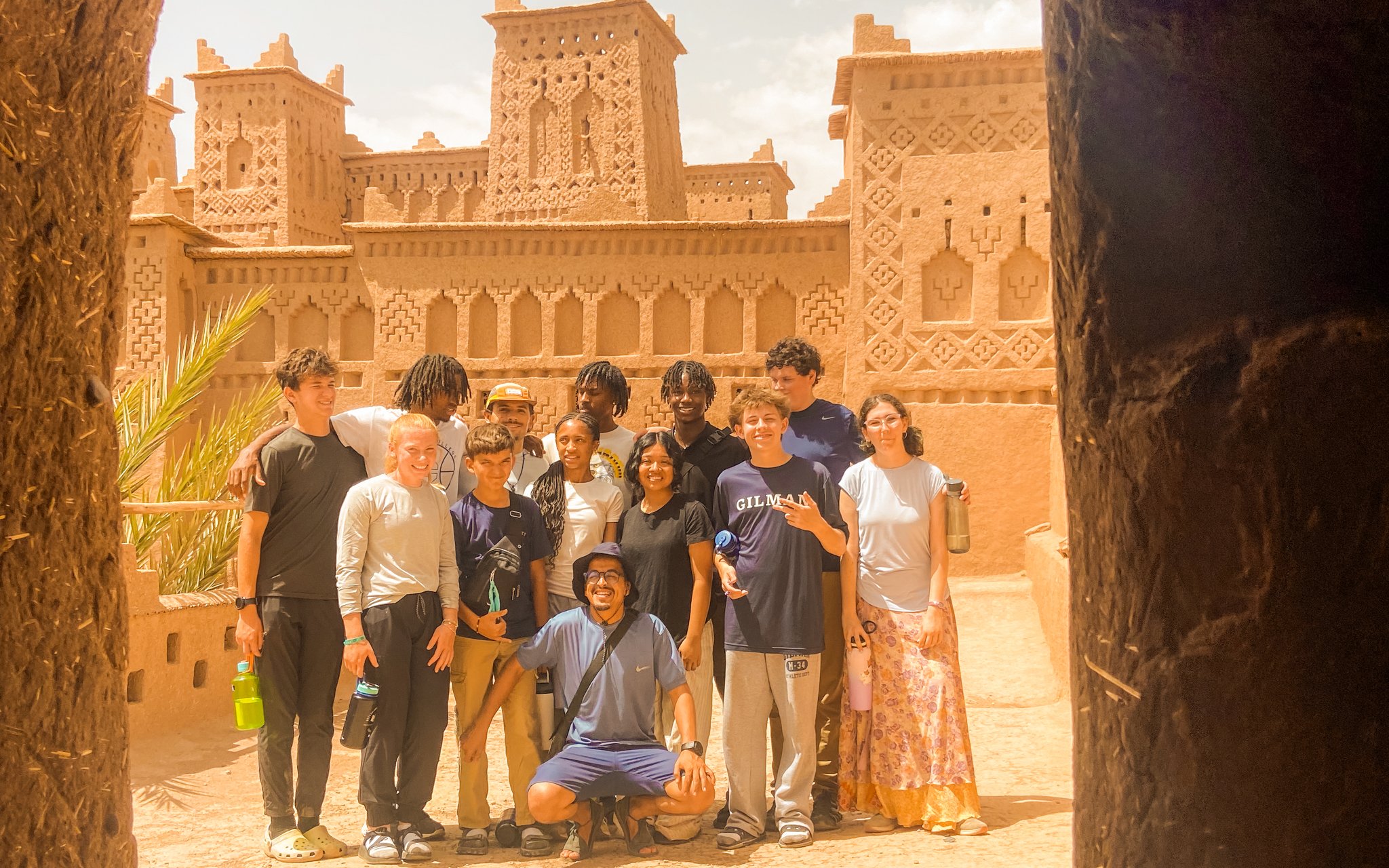
Day 7 is Aït Benhaddou, a 14th-century village and UNESCO World Heritage site. Students explore its mudbrick kasbahs and learn about its place in Morocco’s history.
Day 8 includes the Dades Gorges, Kasbah Amridil, henna and cumin cooperatives, palm groves, and rock formations.
Days 11 and 12 bring the group back to Marrakech for a Moroccan cooking class, the souqs, dinner in Jemaa el-Fnaa square, a cultural exchange with Moroccan teens, and Ben Youssef Madrasa.
Day 13 begins with a hands-on Islamic calligraphy workshop before the group travels to Essaouira and explores the beachside medina, local shops, and street food.
Day 14 is a surf lesson on the Atlantic coast, followed by time on the beach and in Essaouira’s markets and streets.
Day 15 brings the group back to Marrakech for a final dinner, henna, live music, and reflection.
The cultural pieces are not limited to one museum visit. They show up through language, food, service, architecture, markets, art, music, and time with local hosts and teens.
What families should know before applying
Trip length and grade range. This is a 16-day trip for high school students completing grades 9 to 12.
Service hours. 10 to 20 hours of service work.
Location. The trip travels through Marrakech, the High Atlas Mountains, the Sahara Desert, and Essaouira.
Travel. Families book flights to and from Marrakech Menara Airport. We use RAK as the gateway airport. Do not book flights until RLT sends the official travel windows.
Escorted flight option. An optional group flight with an RLT leader is available from the New York area.
Accommodations. Students stay in a mix of local guesthouses, traditional riads, and one night at a desert camp in the Sahara.
Rooming. Students sleep in shared rooms or large sleeping areas, with gender-divided accommodations. Most rooms are shared by 2 to 5 students.
Bathrooms and showers. Accommodations have basic bathrooms with flush toilets. Showers are available daily.
Food. Meals are cooked by local partners and shared as a group, often on a terrace, in a family courtyard, at a restaurant, or around a desert campfire. Meals may include tagines, couscous, fresh bread, salads, lentils, and stews.
Dietary needs. RLT accommodates allergies and dietary needs, including vegetarian, gluten-free, dairy-free, and more.
Packing. RLT recommends one checked soft duffel bag, not a rolling suitcase, plus a small carry-on backpack. Students bring personal clothing, toiletries, and individual gear. RLT provides group gear and specialized activity equipment needed for the trip.
Passport. A valid passport is required and must be valid for at least 6 months beyond the return date.
Trip insurance. Trip insurance is required for international programs.
Vaccinations. No specific shots are required for our Morocco trip beyond routine immunizations based on current CDC guidelines. Families should make sure students are up to date on routine vaccinations, including a tetanus booster within the past 10 years, and check with a pediatrician before international travel.
Phones. This program is phone-free. Leaders collect phones and personal electronics on Day 1 and return them at the end. Digital cameras and GoPros are welcome as long as they do not connect to the internet.
Questions families often ask
What kind of service do students do?
Students work on service projects designed in collaboration with local residents in an Amazigh village in the High Atlas Mountains. The work may include light construction, small-scale farming, or youth programs.
Does my teen need Arabic or French experience?
No language is required for our Morocco trip. The itinerary includes language lessons during the High Atlas village portion, and students should be open to listening, trying phrases, and learning from local hosts.
Where do students sleep?
Students stay in local guesthouses, traditional riads, and one night at a Bedouin-style desert camp in the Sahara. Rooms or sleeping spaces are shared and divided by gender.
Is the Sahara the main part of the trip?
It is one important part, but not the only one. The trip also includes Marrakech, the High Atlas Mountains, Aït Benhaddou, the Dades Gorges, palm groves, Ouarzazate, Essaouira, service work, cooking, calligraphy, cultural exchange, and surfing.
Is this trip active?
Students should be ready for full days of travel, walking, service work, market exploration, camel trekking, surfing, and shared group routines.
How to talk to your teen about this trip
Before they go, you might say:
“You’ll spend 16 days in Morocco with a high school group. You’ll start in Marrakech, spend several days in an Amazigh village in the High Atlas Mountains, work on service projects with local residents, visit Aït Benhaddou and the Dades Gorges, ride camels into the Sahara, learn to cook Moroccan food, meet Moroccan teens, try Islamic calligraphy, surf in Essaouira, and be off your phone.”
After they come home, ask:
“What did your group work on in the High Atlas village?”
“What did you learn during the language lessons?”
“What was Aït Benhaddou like?”
“What do you remember from the Sahara night?”
“What was the cultural exchange with Moroccan teens like?”
Explore the Morocco trip
For dates, tuition, itinerary, accommodations, packing details, paperwork, and the technology policy, see the full Morocco itinerary.