
3 Things Most Families Don't Know About Our Alaska Trip
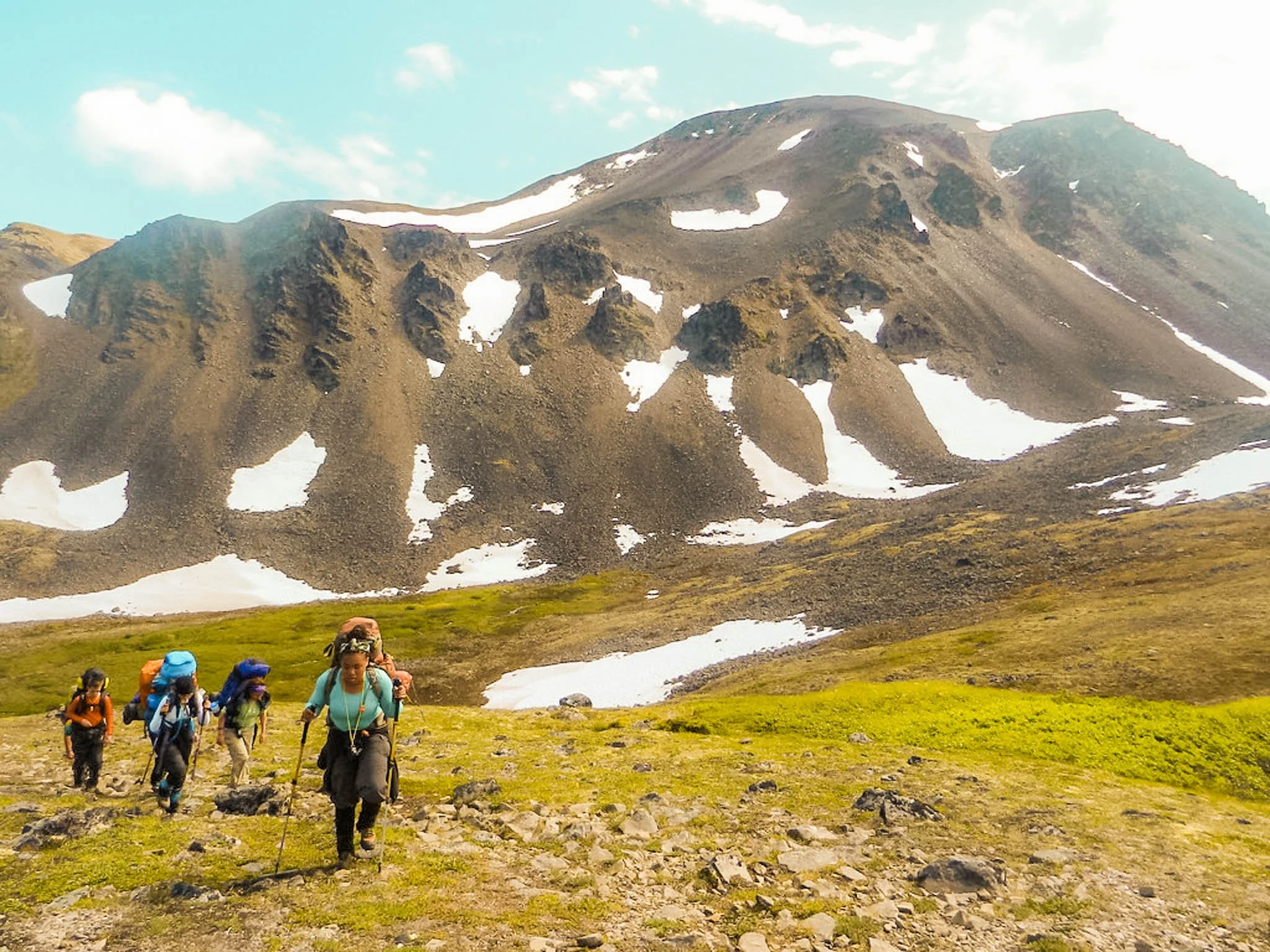
Most families who ask us about Alaska are trying to understand what the trip actually feels like.
It is not a cruise.
It is not a sightseeing loop from a bus window.
The Alaska trip moves through culture, wilderness adventure, and environmental service: Anchorage, the Alaska Native Heritage Center, the Matanuska River, Prince William Sound, Kenai, Homer, Peterson Bay, and back to Anchorage for the final banquet.
Here are three things families may not know before reading the full itinerary.
1. The trip starts with culture and place
Day 2 begins at the Alaska Native Heritage Center.
The group takes a private tour of six full-scale Native dwellings around Lake Tiulana. A local Culture Bearer shares stories and traditional lifeways connected to Alaska Native communities.
That matters because the trip does not begin with an activity for activity’s sake. Students start by learning more about the people, history, and cultures connected to the land they are about to travel through.
In the afternoon, the group bikes the Tony Knowles Coastal Trail, keeping an eye out for moose, bald eagles, and other wildlife.
It is a clear first full day: listen, learn, move, and begin paying attention.
2. The first week moves through rafting, kayaking, hiking, and glaciers
Days 3 to 7 are the most adventure-heavy stretch of the trip.
Day 3 is hiking on trails outside Anchorage, with dramatic landscapes and the chance to spot wildlife.
Day 4 is whitewater rafting on the Lion’s Head section of the Matanuska River, with Class III and IV rapids through backcountry terrain.
Day 5 brings the group to Whittier, reached through a one-way tunnel, for sea kayaking in Prince William Sound. Students paddle past rock formations and waterfalls in one of Alaska’s most scenic marine landscapes.
Day 6 is Kenai by land and sea. The group hikes through Caines Head State Recreation Area for views of the Kenai Peninsula and coastal Seward, then explores the park by boat. Expect the possibility of seeing humpback whales, puffins, sea otters, and glaciers, depending on conditions.
Day 7 is Exit Glacier, a remnant of the Harding Icefield and a place to learn about glacial melt and climate change in real time.
This is a full stretch. Students are hiking, paddling, rafting, traveling, and learning how to move through big landscapes with a small group.
3. Peterson Bay is where the service deepens
After the first week, the group travels south to Homer.
Days 9 to 12 are focused on environmental service projects with local leaders from Peterson Bay Field Station.
The work supports trails, wildlife, and protected lands. Expect projects like identifying plants, tracking changes in the forest, logging notes and field observations for rangers, sketching and journaling conservation work, and assessing trail conditions in remote areas.
Alongside the service, students hike through coastal forests, learn about local ecology, and explore cultural traditions connected to the land and sea.
This is not a quick service stop. The group spends several days in one area, doing careful work that asks students to observe, record, move slowly, and understand why the details matter.
Day 13 brings the group back to Anchorage for reflection, time in the city, sunset at Beluga Point, and the final RLT banquet.
Day 14 is travel home from Anchorage.
What families should know before applying
Trip length and grade range. This is a 14-day trip for high school students completing grades 9 to 12.
Service hours. 15 to 25 hours of service work.
Travel. Families book flights to and from Anchorage, Alaska. We use ANC as the gateway airport. and asks families not to book flights until RLT provides official travel windows.
Accommodations. Students stay in a mix of rustic campsites, cozy yurts, and a shared group house. The trip includes 7 nights in rustic campsites and yurts and 6 nights in a group house.
Tents and shared spaces. During camping portions, students sleep in shared tents, 2 to 3 per tent, organized by gender. Everyone helps set up tents, cook meals, and keep shared spaces clean.
Bathrooms and showers. Campsites and yurts have basic amenities with access to flush bathrooms. Short showers are typically available every 1 to 3 days.
Food. Meals are cooked together in rotating groups using camp stoves and simple setups. Students help plan, prep, cook, and clean with leader guidance.
Rafting. The itinerary includes Class III and IV whitewater rafting on the Matanuska River. Students should be ready for active days, water-based activities, and close instruction from leaders and outfitters.
Wildlife. The itinerary includes opportunities to look for wildlife, including moose, bald eagles, whales, puffins, sea otters, and bears. Wildlife sightings depend on timing, conditions, and location.
Packing. RLT recommends one checked soft duffel bag, not a rolling suitcase, plus a small carry-on backpack. Students bring personal clothing, toiletries, and individual camping gear such as a sleeping bag and sleeping pad. RLT provides group gear, including tents, cooking equipment, and specialized activity equipment needed for the trip.
Phones. RLT programs are phone-free. Leaders collect phones and personal electronics on Day 1 and return them at the end of the trip. Digital cameras and GoPros are welcome as long as they do not connect to the internet.
Questions families often ask
Is this trip mostly hiking?
No. Hiking is part of the trip, but the itinerary also includes biking, whitewater rafting, sea kayaking, a boat tour, environmental service, cultural learning, and time in Anchorage, Whittier, Seward, Homer, and Peterson Bay.
Does my teen need previous rafting or kayaking experience?
We do not list prior rafting or kayaking experience as a requirement. Students should be comfortable with active days outside, water-based activities, and listening closely to guides and leaders.
What kind of service do students do?
Students work with local leaders from Peterson Bay Field Station on environmental restoration and education-based projects. Expect plant identification, field observations, conservation journaling, and trail-condition assessment as examples.
Where do students sleep?
Students stay in a mix of rustic campsites, yurts, and a shared group house. During camping portions, tents are shared by 2 to 3 students and organized by gender.
Will they see wildlife?
There are strong opportunities to look for wildlife throughout the itinerary, but sightings are never guaranteed. Common wildlife sightings include moose, bald eagles, humpback whales, puffins, sea otters, bears, and other wildlife as possibilities.
How to talk to your teen about this trip
Before they go, you might say:
“You’ll spend two weeks in Alaska with a small group. You’ll visit the Alaska Native Heritage Center, bike the Tony Knowles Coastal Trail, raft the Matanuska River, kayak in Prince William Sound, hike near glaciers, do environmental service near Peterson Bay, and live in a mix of tents, yurts, and group housing. You’ll be off your phone and helping with group responsibilities.”
After they come home, ask:
“What did you learn at the Alaska Native Heritage Center?”
“What was the Matanuska River like?”
“What did you notice from the kayak in Prince William Sound?”
“What kind of field notes or trail work did your group do near Peterson Bay?”
Explore the Alaska trip
For dates, tuition, itinerary, accommodations, packing details, paperwork, and the technology policy, see the full Alaska itinerary.