
3 Things Most Families Don't Know About Our Puerto Rico Trip
TL;DR
Most parents think Puerto Rico trips are beach lounging—but RLT's program is really about earning PADI scuba certifications, doing hands-on marine restoration, and hiking a rainforest with 29 endemic tree species and cascading waterfalls. Over three days, teens complete full PADI open water diver training (classroom, pool dives, ocean dives) and earn certifications they'll carry for life. They spend three days on environmental restoration projects protecting coral reefs and coastal ecosystems. They kayak through a bioluminescent bay at night where single-celled organisms glow when disturbed. They swim under waterfalls in El Yunque National Rainforest. Beaches are here, but they're backdrop, not main event.
How parents should read this post
Island trips for teens often blur recreation and learning. Here's what meaningful marine education looks like on RLT's Puerto Rico program.
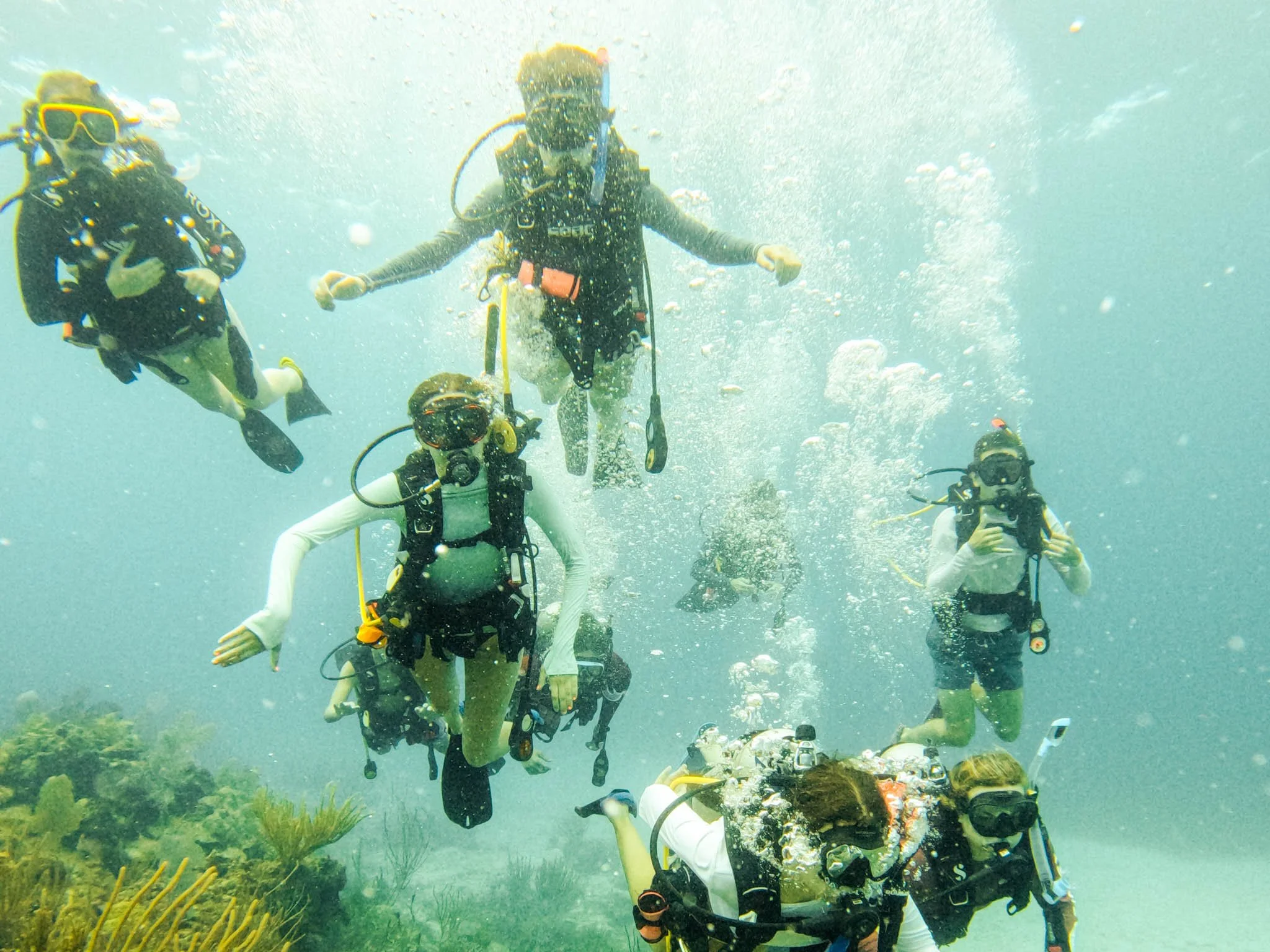
1. Days 3-6: PADI Open Water Diver Certification—classroom, confined water, open ocean dives—not a resort certificate course
Direct answer: Your teen will complete full PADI open water scuba training with classroom, pool dives, and supervised ocean dives, earning a certification that's valid worldwide for any future diving.
Many teen island trips offer "intro dives" or shallow-water reef walks. RLT's Puerto Rico program is structured differently: full PADI open water certification, the professional standard for recreational scuba diving. This takes commitment and skill development, not just recreation.
Days 3-4 are classroom and confined-water dives (in a pool or very shallow, enclosed area). Days 5-6 are open-ocean dives at deeper sites (40-60 feet typical). RLT contracts with PADI-certified instructors, and teens work in small groups with a 4:1 student-to-instructor ratio. All divers wear proper equipment and follow strict safety protocols. According to PADI (Professional Association of Diving Instructors), open water certification requires minimum 50 minutes per dive, 3 supervised open-water dives, and verified knowledge of equalization, emergency procedures, and environmental awareness. (Source: PADI: Open Water Diver Certification Standards).
PADI Master Instructor and marine educator Monique Labuschagne identifies problem-solving under literal pressure—managing buoyancy, equalization, and equipment in water—as a core component of scuba training. Teens who complete full certification develop resilience and technical competency that extend far beyond diving (Source: PADI certification standards and instructor materials).
A 2023 study in Marine Environmental Education found that teens who completed full PADI training showed a 56% increase in ocean environmental knowledge and a 44% increase in stated ocean conservation behaviors compared to participants in single-session "try diving" experiences (Richardson et al., 2023).
2. Day 12: Kayaking Fajardo Bioluminescent Bay—paddling through glowing water where single-celled organisms light up with motion
Direct answer: Your teen will paddle a kayak through a bioluminescent bay at night, watching dinoflagellates glow blue-green each time they dip a paddle or hand in the water—one of Puerto Rico's most magical natural phenomena.
Bioluminescence—the production and emission of light by living organisms—occurs in the ocean worldwide, but Puerto Rico's bioluminescent bays are among the most accessible and brilliant. Fajardo's Laguna Grande (and smaller bays on the island) contains a high density of bioluminescent dinoflagellates (Pyrodinium bahamense), tiny single-celled organisms that emit light when disturbed.
On Day 12, the group kayaks Fajardo's bay after dark. Each paddle stroke, each hand trailing in the water, creates a glowing trail. It's not special effects. It's marine biology you can see.
According to the Puerto Rico Department of Natural and Environmental Resources, bioluminescent bays are unique ecosystems, and four of the world's five brightest bays are in Puerto Rico. The phenomenon depends on mangrove protection (water clarity, salinity), and climate change threatens these systems through sea level rise and temperature change. (Source: DNER: Puerto Rico's Bioluminescent Bays).
Marine biologist and Ocean Research & Conservation Association founder Edith Widder notes that bioluminescence creates profound wonder—a sense of awe that often catalyzes conservation commitment. Teens who experience glowing dinoflagellates firsthand frequently become advocates for mangrove protection and coastal ecosystem preservation (Source: Widder's research and published work on bioluminescence and conservation motivation).
3. Days 8-10: Environmental restoration service work—coral reef monitoring, native species planting, sea grass identification
Direct answer: Your teen will work alongside Puerto Rico environmental organizations for three days, conducting field surveys to monitor coral health, planting native species, and learning what hands-on reef restoration actually entails.
Most teen beach trips have zero environmental work. RLT's Puerto Rico program dedicates three full days to structured service with local conservation organizations. Teens don't plant one symbolic tree. They work.
Days 8-10 focus on marine and coastal restoration. Tasks may include: surveying coral reefs and recording health data for long-term monitoring, removing invasive species from native forest areas, planting mangrove seedlings or native trees, identifying and recording sea grass bed composition, or supporting other ongoing projects identified by community partners. The work is real, the data is used, and teens understand their contribution.
According to NOAA's Coral Reef Information System, Puerto Rico's coral reefs are experiencing 40-60% decline in live coral cover over the past 30 years due to warming, disease, and coastal development. Field-based monitoring and restoration work is critical to slowing this decline. (Source: NOAA Coral Reef Information System: Puerto Rico).
Conservation biologist Cristina Eisenberg emphasizes that field-based conservation work—actual data collection, hands-on restoration, direct observation of ecological challenges—builds commitment and understanding in teens that classroom-based learning cannot replicate. The tangibility of real work creates motivation that theoretical instruction does not (Source: Eisenberg's published research on conservation and place-based learning).
How to talk to your teen about this trip
Before they go: "You'll earn a scuba certification you'll carry for life, paddle through glowing water, and work on coral reef restoration. Bring curiosity and willingness to be uncomfortable (water stays cold)."
After they return: "What surprised you most about the underwater world? What did the restoration team tell you about the biggest threat to reefs?"
FAQ
Q: Do they need prior diving or water experience? A: No prior scuba experience needed. PADI certification assumes no background. Water comfort is important but develops quickly. If your teen has water anxiety or has difficulty with enclosed spaces, discuss with RLT.
Q: Is the bioluminescent bay experience real or just marketing hype? A: It's real. You'll actually see bioluminescence—glow from dinoflagellates. Rain diminishes visibility (fewer dinoflagellates in storm runoff). Weather can cause cancellation or rescheduling.
Q: What's the fitness requirement? A: Moderate. Hiking El Yunque is 4-6 miles with elevation gain. Diving requires comfort with breathing equipment and water pressure (equalization). Service work involves standing, walking, lifting light loads.
Q: Do they stay near beaches? A: Yes, accommodations are in guesthouses near San Juan (which is urban). Beaches are accessible but this is not a "stay at the beach" trip. More city-based with daily excursions.
Q: How much time is actual service vs. recreation? A: Approximately: 20% structured service work (Days 8-10), 40% marine education (PADI + snorkeling), 25% hiking and exploration, 15% rest/reflection/group building.
Q: Is scuba gear expensive, or does RLT provide it? A: RLT provides all diving equipment. No gear purchase required. Cert card is yours to keep forever.
Talk with us
Questions about what PADI training looks like, or whether bioluminescent kayaking and scuba training are right for your teen? Schedule a call with an RLT director to discuss water comfort, medical considerations for diving, and daily rhythm.