
3 Things Most Families Don't Know About Our Azores Trip
What does a service and adventure trip in the Azores actually look like day to day?
On São Miguel, students can move from a donkey sanctuary to volcanic crater lakes, from snorkeling along the coast to a tea plantation, from whale watching to canyoning in river gorges.
The trip is high school only, with limited space. It is 14 days, all based on São Miguel Island.
Here are three things families may not know before reading the full itinerary.
1. The service starts at a local donkey sanctuary
Days 3 and 4 are spent helping at a local donkey sanctuary.
Students learn about the history of donkeys on the island and support the daily work of the sanctuary. Tasks may include feeding, caring for the animals, and mucking out paddocks.
Day 10 brings the group back to finish service work and say goodbye to the animals before heading to natural thermal hot springs in the evening.
The service is hands-on and practical. Students are not there to watch from a distance. They are helping with the routines that keep the sanctuary and its animals cared for.
The trip also includes environmental service connected to native habitats, planting, cleanup, and eco-crafts using natural dyes and recycled materials.
The Azores trip includes 15 to 20 service hours.
2. Students paddle and hike through volcanic landscapes
The Azores are volcanic islands, and the itinerary keeps returning to that geography.
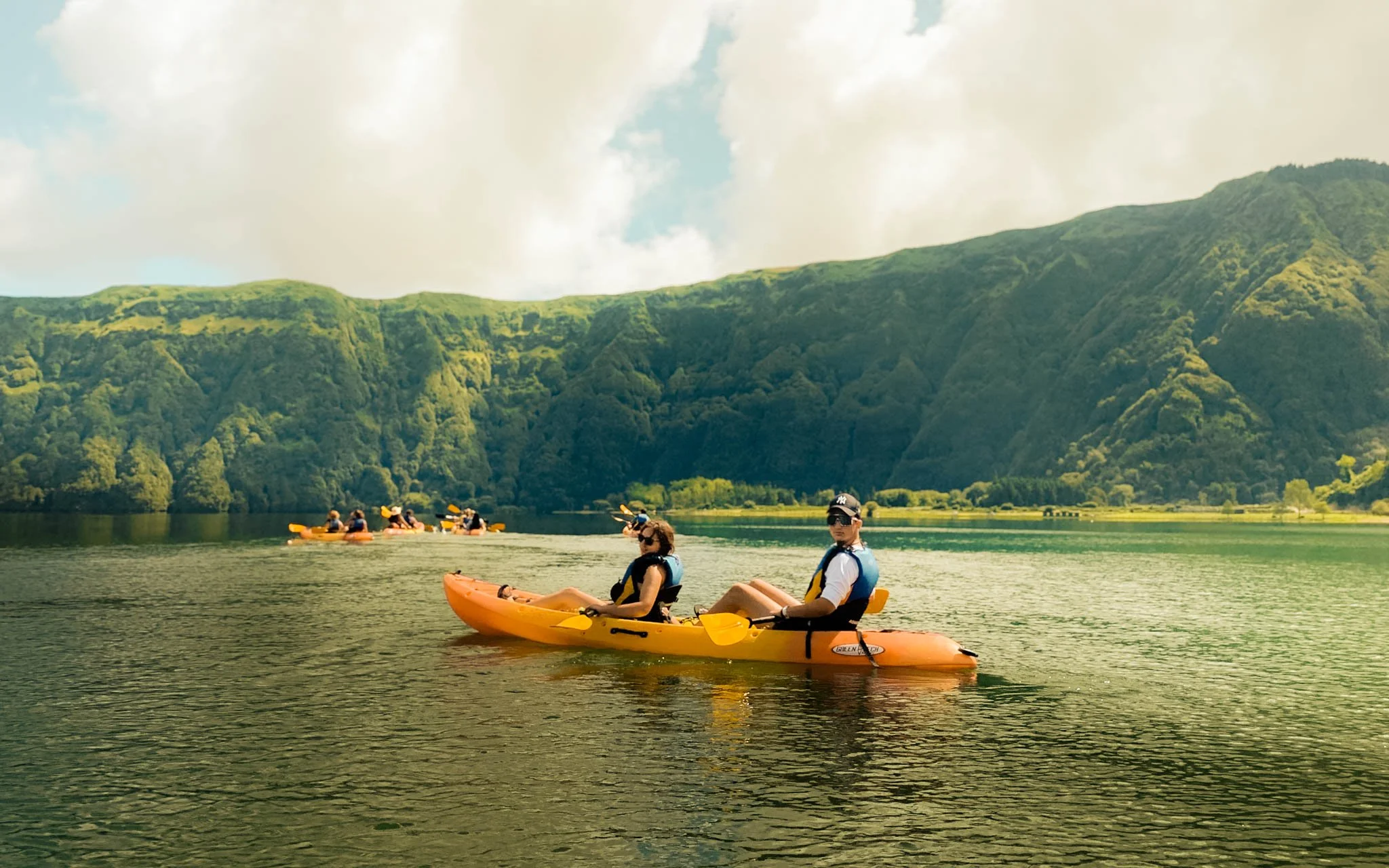
On Day 7, students kayak or stand-up paddleboard across the twin crater lakes of Sete Cidades: Lagoa Verde and Lagoa Azul.
On Day 11, the group hikes to Lagoa do Fogo, a crater lake surrounded by green wilderness.
Day 10 includes natural thermal hot springs warmed by volcanic heat, and Day 12 brings canyoning through river gorges in Nordeste, with jumping, sliding, and climbing through moving water.
These are not separate themes on the trip. The water, rock, ridges, hot springs, lakes, and coast are all connected to the island’s volcanic origins.
3. The trip mixes coast, culture, and island ecology
The Azores trip is not only animal service.
Day 5 starts with snorkeling off the coast near Ponta Delgada, where students explore the marine life of the Azores. Later that day, the group visits a 100-year-old pineapple plantation to learn about pineapple cultivation.
Day 6 includes the Gorreana Tea Factory, the oldest tea factory in Europe, followed by Arquipélago, a contemporary arts center in Ribeira Grande.
Day 8 is a guided whale-watching tour, then a swim, snorkel, and beach hangout at Princess Ring Islet. The day ends with time in Vila Franca do Campo.
Day 9 is a hike through lush trails, wooden bridges, waterfalls, and the ruins of an old watermill, followed by a local cooking class.
Day 13 closes with time at Santa Barbara Beach, where students can surf, snorkel, or relax before the final RLT banquet.
What families should know before applying
Trip length and grade range. This is a 14-day trip for high school students completing grades 9 to 12.
Service hours. The trip page lists 15 to 20 service hours.
Location. The trip takes place on São Miguel Island in the Azores.
Accommodations. Students camp in tents throughout the trip on São Miguel Island. Tents are shared by 2 to 3 students, organized by gender.
Bathrooms and showers. Campsite bathrooms include clean flush toilets and other facilities. Showers are available every 1 to 2 days.
Food. Most meals are prepared by the group at camp. Students rotate through cook crews to plan, prep, cook, and clean with leader support. The group also eats at some local cafes and restaurants as part of the experience.
Travel. Families book flights to and from São Miguel Airport (PDL). Do not book flights until RLT sends the official travel window.
Escorted flight option. An optional group flight with an RLT leader is available from the New York area.
Packing. RLT recommends one checked soft duffel bag, not a rolling suitcase, plus a small carry-on backpack. Students bring personal clothing, toiletries, and individual camping gear such as a sleeping bag and sleeping pad. RLT provides group gear, including tents, cooking equipment, and specialized activity equipment.
Passport. A valid passport is required for this program.
Trip insurance. Trip insurance is required for international trips.
Phones. This trip is device-free. Leaders collect phones and personal electronics on Day 1 and return them at the end. Digital cameras and GoPros are welcome as long as they do not connect to the internet.
Questions families often ask
Is this mostly an animal service trip?
Animal service is an important part of the trip, especially Days 3, 4, and 10. The itinerary also includes snorkeling, kayaking or paddleboarding, whale watching, hiking, hot springs, canyoning, surfing, cultural visits, and environmental service.
Where do students sleep?
Students tent camp throughout the trip on São Miguel Island. Tents are shared by 2 to 3 students, organized by gender.
Does my teen need prior camping experience?
Prior camping experience is not listed as a requirement on the trip page. Students should be ready to sleep in tents, help set up camp, prepare meals, keep shared spaces clean, and live simply with the group.
Does my teen need to be comfortable in the water?
Yes. The itinerary includes snorkeling, swimming, kayaking or paddleboarding, canyoning, and beach time. If water comfort is a concern, talk with us before enrolling so we can help you think through fit.
What kind of service will they do?
Students help at a donkey sanctuary with tasks that may include feeding, caring for animals, and mucking out paddocks. The trip also includes environmental service such as native habitat restoration, planting, cleanup, and eco-crafts.
How to talk to your teen about this trip
Before they go, you might say:
“You’ll camp for the full trip on São Miguel Island. You’ll help at a donkey sanctuary, snorkel, kayak or paddleboard crater lakes, visit a tea factory and pineapple plantation, go whale watching, hike to waterfalls and crater lakes, soak in hot springs, go canyoning, and spend the final day at Santa Barbara Beach. You’ll be off your phone and helping with group responsibilities.”
After they come home, ask:
“What did the donkey sanctuary need help with?”
“What was Sete Cidades like from the water?”
“What did you notice while snorkeling?”
“What was the canyoning day like?”
“What did you cook with the group?”
Explore the Azores trip
For dates, tuition, itinerary, accommodations, packing details, paperwork, and the technology policy, visit the full trip page.