
3 Things Most Families Don't Know About Our Maine Trip
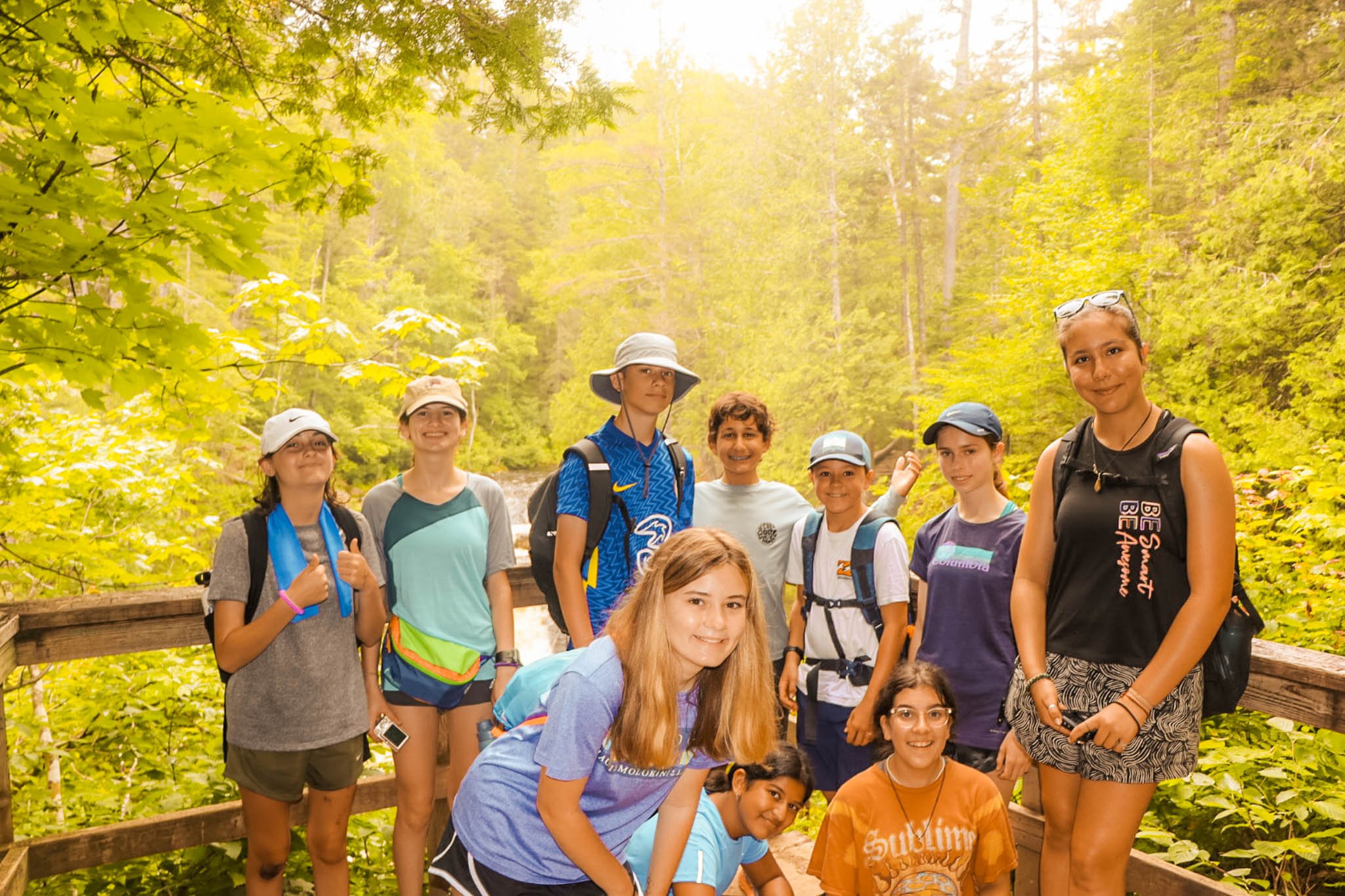
Maine is our shortest trip, but it still asks students to do real things.
In 7 days, students camp in or near Acadia National Park, paddle the coastline by sea kayak, complete two days of conservation service with Friends of Acadia, climb granite cliffs with expert guides, and hike Cadillac Mountain for sunrise.
Here are three things families may not know before reading the full itinerary.
1. The climbing day is on Acadia granite
Day 5 is rock climbing on Acadia’s granite cliffs.
Students climb with expert guides, learn to belay, practice ropework, and build confidence on routes matched to the group and the setting.
Climbing outside feels different from climbing in a gym. The rock is uneven. Foot placements are not marked. Students have to slow down, listen closely, trust the system, and try one move at a time.
They do not need to arrive as experienced climbers. The day is built around instruction, support, and learning the basics in a real outdoor setting.
If your student is nervous about heights, that is worth telling us before the trip. We can talk through what the day looks like and whether the trip feels like the right fit.
2. The kayaking day is along the Acadia coastline
Day 2 is a guided sea kayaking day along the rugged Acadia coastline.
The group paddles through rocky inlets, beaches, and coastal caves, watching for local wildlife along the way. After a picnic lunch, students swim and relax on the beach before heading back to camp.
This is not a pool or a small pond.
Students are on the Maine coast, moving with guides, listening to instructions, and learning how to travel together on the water.
For many students, this is the first full day when the group starts to feel real. They are sharing boats, eating lunch outside, getting wet, and figuring out how to move as a team.
3. The service is tied directly to Acadia National Park
Days 3 and 4 are service days with Friends of Acadia.
Students support environmental restoration efforts in the park. Projects may include trail work, beach cleanups, erosion control, and planting native trees.
The Maine trip includes 6 to 10 service hours.
This is hands-on conservation work in a specific place. Students are not doing service in the abstract. They are helping care for the same park where they are camping, hiking, kayaking, and climbing.
That connection matters.
When students clear brush, help with trail work, or support restoration projects, they see the park differently. They begin to understand that places like Acadia stay open and cared for because people keep showing up to maintain them.
The final full day starts before sunrise
Day 6 begins early with a hike up Cadillac Mountain for sunrise.
After several days of paddling, service, camping, and climbing, the group gets up in the dark and hikes together before the day begins.
Later, students have time for a final stop in Bar Harbor for ice cream, treats, and souvenirs. That evening, the group gathers for the final RLT banquet.
Day 7 is travel home from Portland.
What families should know before applying
Trip length and grade range. Maine is a 7-day trip with separate middle school and high school sessions. It is for students completing grades 6 to 8 and grades 9 to 12.
Service hours. 6 to 10 hours of service work.
Location. The trip takes place in Acadia National Park, Maine.
Accommodations. Students tent camp in or near Acadia National Park throughout the week. Tents are shared by 2 to 3 students, organized by gender.
Bathrooms and showers. Campsites are basic, with access to flush bathrooms. Short showers are available every 3 days.
Food. All meals are prepared as a group at the campsite. Students rotate through cook crew, helping plan, prep, cook, and clean with leader support. Expect simple outdoor meals like pasta, burrito bowls, oatmeal, pancakes, and wraps.
Dietary needs. RLT accommodates allergies and dietary needs, including vegetarian, gluten-free, dairy-free, and peanut-free.
Travel. Families book flights to and from Portland, Maine, or meet the group there at the start and end of the trip. We use PWM as the gateway airport. and asks families not to book flights until RLT provides official travel windows.
Packing. RLT recommends one checked soft duffel bag, not a rolling suitcase, plus a small carry-on backpack. Students bring personal clothing, toiletries, and individual camping gear such as a sleeping bag and sleeping pad. RLT provides group gear, including tents, cooking equipment, and specialized activity equipment.
Phones. RLT trips are phone-free. Leaders collect phones and personal electronics on Day 1 and return them at the end. Digital cameras and GoPros are welcome as long as they do not connect to the internet.
Questions families often ask
Is Maine a good first RLT trip?
It can be. Maine is shorter than our two-week and three-week programs, but it still includes tent camping, sea kayaking, service work, rock climbing, hiking, shared meals, and phone-free group living. It is a real RLT trip in a shorter format.
Does my student need climbing experience?
No climbing experience is listed as required. Students climb with expert guides and learn the basics, including belaying and ropework.
Does my student need kayaking experience?
No prior kayaking experience is listed as required. The kayaking day is guided and takes place along the Acadia coastline.
Where do students sleep?
Students sleep in shared tents in or near Acadia National Park. Tents are organized by gender, with 2 to 3 students per tent.
What kind of service do students do?
Students partner with Friends of Acadia on environmental restoration efforts. Projects may include trail work, beach cleanups, erosion control, and planting native trees.
How to talk to your student about this trip
Before they go, you might say:
“You’ll spend one week camping in Maine with a small group. You’ll kayak along the Acadia coastline, do conservation work with Friends of Acadia, climb granite cliffs, hike Cadillac Mountain for sunrise, help cook meals, and be off your phone. The leaders will teach the routines, but you’ll be expected to help.”
After they come home, ask:
“What did your group work on with Friends of Acadia?”
“What was it like climbing outside?”
“What did you see from the kayak?”
“What was the Cadillac Mountain sunrise hike like?”
“What did your cook crew make?”
Explore the Maine trip
For dates, tuition, itinerary, accommodations, packing details, paperwork, and the technology policy, see the full Maine itinerary.