
3 Things Most Families Don't Know About Our Colorado Trip
TL;DR
Most parents think "Colorado trip" means scenic hiking and adventure tourism—but RLT's program is anchored on a wolf sanctuary partnership and full-immersion backcountry experience. Teens spend five days at Mission: Wolf, a sanctuary for rescued wolves, caring for the animals: feeding, chopping firewood, hauling water, building and maintaining enclosures. They spend four days backpacking in the Sangre de Cristo Mountains (reaching 12,000+ feet). They whitewater raft Class II-III rapids on the Arkansas River, rock climb granite spires in San Isabel National Forest, explore the tallest sand dunes in North America, and soak in natural hot springs. They camp the full 14 days, cooking meals together and managing group logistics. It's not a resort trip. It's wilderness immersion with service and skill-building as the spine.
How parents should read this post
Colorado trips abound for teens. Here's what makes RLT's program different—and why the structure asks real things of your teen.
1. Days 3-6: Wolf Sanctuary service work at Mission: Wolf—five days caring for rescued animals, learning predator ecology, building enclosures
Direct answer: Your teen will spend five days at Mission: Wolf, a sanctuary for rescued wolves, performing hands-on care: feeding, grooming, hauling firewood, fixing fencing, helping maintain the sanctuary's operations.
Mission: Wolf is a 501(c)(3) sanctuary located in southern Colorado near Westcliffe. It rescues wolves from captive or problematic situations and provides lifetime care. The sanctuary houses 20+ wolves and operates on a limited budget, relying on volunteer and visiting support for daily operations. RLT teens contribute 5 days of service work that is genuinely needed.
Tasks include: preparing and distributing food (understanding canine nutrition and behavioral responses), hauling firewood for winter storage (heavy, sustained work), repairing and building enclosures (fence work, basic carpentry), grooming animals (learning to read wolf behavior and approach safely), and general site maintenance. Teens work alongside sanctuary staff and learn about wolf reintroduction efforts, predator-prey ecology, and why wolves matter to ecosystem health.
According to the Defenders of Wildlife, wolves are keystone predators that regulate prey populations, increase biodiversity, and create ecological cascades that benefit entire ecosystems. In North America, wolf populations are recovering slowly, with wild populations now around 12,000 (compared to millions pre-1900). (Source: Defenders of Wildlife: Wolf Ecology).
Research from the American Camp Association demonstrates that hands-on animal care experiences in natural settings deepen teens' understanding of ecological relationships. According to the International Wolf Center (founded by renowned wolf researcher Dr. L. David Mech), direct engagement with wolves and other predators shifts perceptions from threat-based to ecosystem-based understanding.
Service-learning experiences that combine environmental stewardship with wildlife education consistently show measurable gains in conservation commitment and ecological knowledge retention among adolescents.
2. Days 7-8: Backcountry hiking in the Sangre de Cristo Mountains—summiting peaks above 12,000 feet, sleeping in a tent above treeline
Direct answer: Your teen will hike into the Sangre de Cristo Mountains, reaching elevations of 12,000+ feet, camping above treeline and sleeping under stars on a mountainside.
The Sangre de Cristo range is part of the Rocky Mountains, running north-south through southern Colorado. Peaks in the range exceed 14,000 feet (called "fourteeners"). RLT's hikes target peaks in the 11,000-12,500 foot range—high enough to challenge and excite, not so extreme as to require mountaineering skills.
On Days 7-8, the group hikes into the range, carrying loaded packs (25-35 lbs typical), gaining 2,000-3,000 feet of elevation over 5-8 miles. They camp above treeline (where trees stop growing due to altitude, wind, and cold), sleep in tents on rocky terrain, and wake to sunrise over the surrounding peaks. Nights at altitude (11,000+ feet) are cold (below freezing even in summer), clear, and still. Stars are visible in extraordinary clarity.
According to the U.S. Geological Survey, the Sangre de Cristo range is geologically ancient (formed during the Laramide Orogeny 70 million years ago) and among Colorado's most rugged and least-developed ranges, preserving alpine ecosystems found nowhere else. (Source: USGS: Colorado Geological History).
High-altitude backpacking builds both technical outdoor skills and psychological resilience. Teens learn to manage physical challenges in remote settings, recognize their own capabilities, and develop the kind of earned confidence that comes from sustained challenge in a natural environment—not manufactured achievement in a controlled setting.
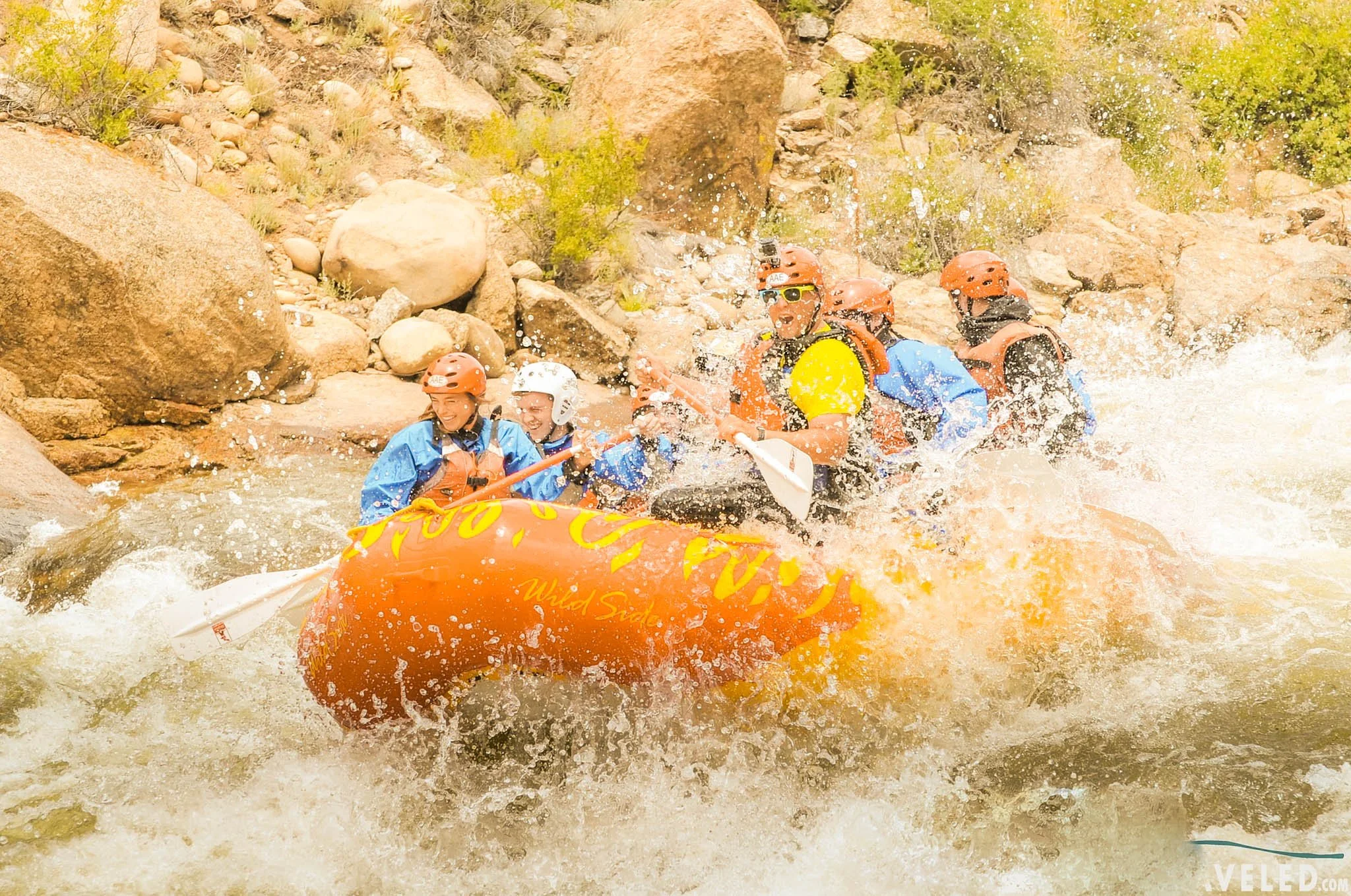
3. Day 10: Whitewater rafting the Arkansas River—Class II-III rapids through Browns Canyon with trained guides and ACA-certified safety protocols
Direct answer: Your teen will navigate Class II-III whitewater rapids on the Arkansas River, paddling with teammates, learning to read current and work as a crew under guide leadership.
The Arkansas River is Colorado's most-rafted river and the state's primary whitewater education corridor. Browns Canyon, a section south of Buena Vista, features 5-7 miles of consistent Class II-III rapids (manageable for teen first-timers) with scenic canyon geology, wildlife viewing opportunities, and excellent safety infrastructure.
On Day 10, teens raft with trained guides holding ACA (American Canoe Association) certifications and minimum 80 hours of Wilderness First Responder training. Guides teach paddle technique, boat positioning, and basic hydrology before launching. Teens sit in the boat and paddle coordinated strokes, responding to guide commands. Class II-III rapids create excitement and challenge without the serious danger of Class IV+ water.
According to the American Whitewater Association, whitewater rafting is increasingly recognized as an outdoor recreation with measurable developmental benefits: learning teamwork under pressure, reading environmental conditions (water level, current), and managing fear in a structured setting. (Source: American Whitewater: Rafting Education).
Whitewater rafting in structured, skilled-led settings teaches real teamwork under pressure. Teens must coordinate with teammates, trust guide expertise, and respond to dynamic environmental conditions. That trust built under real (not simulated) challenge transfers to confidence in other high-stakes situations.
How to talk to your teen about this trip
Before they go: "You'll be caring for wolves, camping above clouds, and rafting real rapids. Bring a strong work ethic and expect to be cold at night, tired during the day, and proud at the end."
After they return: "What surprised you most about the wolves? What was it like camping at that elevation?"
FAQ
Q: How is this different from a typical Colorado adventure camp? A: RLT prioritizes service-based learning (wolf sanctuary) and backcountry skill-building (backpacking, rafting, climbing) over convenience or comfort. You're camping 14 straight days, cooking all meals, and caring for animals. It's immersive, not glamorous.
Q: What physical fitness is required? A: High fitness expected. Teens will hike 5-10 miles daily with elevation gain, carry 25-35 lb packs, raft for 5+ hours, and climb granite faces. If your teen is sedentary, this trip would be an extreme starter. Consider a shorter trip first.
Q: What if my teen hasn't camped before? A: No prior camping needed. RLT teaches all skills on the trail. That said, comfort with sleeping on the ground, outdoor bathrooms, and minimal creature comforts is important. If your teen gets anxious without electricity or running water, discuss with leadership.
Q: Will they really feed wolves? A: Yes. Wolves are fed whole prey (rabbit, deer) 2-3 times per week. Teens participate in food prep and distribution, learning about predator nutrition and handling safety around large wild animals.
Q: Are there bears in Colorado? A: Yes, black bears inhabit the mountains. RLT uses bear-safe food storage and educates teens on bear behavior and prevention. Actual bear encounters are rare; bears typically avoid humans.
Q: How old do they need to be for rock climbing? A: No minimum age, but minimum fitness and comfort with heights. Some 13-year-olds thrive; others at 16 are not ready. Climbing is optional for participants with severe height anxiety, though most face and overcome the fear.
Talk with us
Questions about what wolf sanctuary work looks like, or whether backcountry camping and whitewater rafting are right for your teen? Schedule a call with an RLT director to discuss fitness requirements, altitude acclimatization, and outdoor skills foundation.