
7 RLT Trips Where Cultural Immersion Is Built Into the Itinerary
Cultural immersion is not one activity on a schedule.
It usually happens in smaller, more specific ways: a meal cooked by a host family, a school exchange where everyone is nervous at first, a language lesson over breakfast, a cooking class, a service project shaped by local partners, or a conversation that starts because students are doing something side by side.
These trips give students a way to learn with people, not only about them.
Below are seven RLT trips where cultural learning is built into the day-to-day experience.
Peru: Mystic Mountains
In Peru, students travel through Lima, Cusco, the Sacred Valley, and Machu Picchu.
Days 3 to 6 are based around service and adventure in the Sacred Valley. Students partner with a local nonprofit focused on education access in the Andes, spend time with students and staff, paddleboard a high-altitude lake, and mountain bike through the surrounding hills.
Day 7 brings the group high into the Andes to visit a women’s weaving cooperative. Students learn traditional weaving techniques and see more of the challenges girls face in accessing education.
Days 8 to 10 are a different kind of stretch: the group hikes into a remote mountain community to support a potable water project. These days include rustic camping, hands-on service, and time with local residents.
The trip also includes Machu Picchu, Via Ferrata in the Sacred Valley, Cusco, the Chocolate Museum, Lima, and a final reflection dinner.
Why it fits this list: Students spend time with educators, students, weavers, and local residents while moving through the Sacred Valley and high Andean communities.
Explore Peru: Mystic Mountains
Morocco: Desert Nights
Morocco moves through Marrakech, the High Atlas Mountains, Aït Benhaddou, the Dades Gorges, the Sahara, Ouarzazate, and Essaouira.
The service and cultural immersion stretch happens in an Amazigh village in the High Atlas Mountains. Days 4 to 6 begin with a language lesson over breakfast, then students work on service projects designed in collaboration with local residents. The work may include light construction, small-scale farming, or youth programs. Evenings include shared meals and conversation with community members.
The rest of the itinerary keeps building context. Students explore Aït Benhaddou, a 14th-century village and UNESCO World Heritage site, visit Kasbah Amridil, walk through palm groves, visit henna and cumin cooperatives, ride camels into the Sahara, and camp at a Bedouin-style desert site.
Back in Marrakech, students take a Moroccan cooking class, visit the souqs, meet Moroccan teens for a cultural exchange, explore Ben Youssef Madrasa, and take part in an Islamic calligraphy workshop before heading to Essaouira.
Why it fits this list: Students spend several days in one village, begin mornings with language, share meals with local residents, and move through several regions of Morocco with cultural learning built into the itinerary.
Explore Morocco: Desert Nights
Costa Rica: Coast to Canopy
Costa Rica high school begins in San José, then moves to the Turrialba Valley and the Caribbean coast.
Days 2 to 7 are based in a rural village in the Turrialba region. Students partner with local families and community leaders on projects that may include chicken coops, compost systems, furniture, or small structures. They learn about permaculture, recycling practices, and rural Costa Rican life through the work.
Afternoons may include soccer with local kids, Spanish practice with the host community, and short hikes to rivers or waterfalls. Nights are spent camping in tents on community land, with meals cooked by local partners.
After Turrialba, the group crosses to the Caribbean coast. Students explore Cahuita National Park, surf, kayak through mangrove rivers, and visit a Bribri community to learn how chocolate is grown, harvested, and used in traditional medicine.
The trip ends with a three-day Pacuare River expedition.
Why it fits this list: Students spend several days living near the community where they serve, practicing Spanish, eating meals prepared by local partners, and learning from Bribri community members on the Caribbean coast.
Explore Costa Rica: Coast to Canopy
Costa Rica: Journey Through the Jungle
Costa Rica middle school is built for students completing grades 6 to 8.
The trip starts in San José, then heads to Guayabo National Monument, where students hike through an archaeological site with stone roads, petroglyphs, and aqueducts surrounded by rainforest.
Days 3 to 7 are community service days near Turrialba. Students work alongside local residents on projects that may include building small structures, compost systems, gardening, or recycling efforts. Between projects, the group hikes, plays games, spends time with local kids, and shares meals prepared with help from Costa Rican hosts.
The second half of the trip includes rafting the Pacuare River, ziplining through rainforest canopy, hiking Cahuita National Park, surfing, kayaking through mangroves and jungle rivers, and visiting a Bribri Indigenous community for a cacao and chocolate-making demonstration.
Why it fits this list: It gives younger students a structured introduction to international travel, community service, shared meals, rainforest ecosystems, and Bribri cultural learning.
Explore Costa Rica: Journey Through the Jungle
Thailand: Elephants, Education, and Cultural Exploration
Thailand is a 20-day high school trip through Bangkok, Koh Samet, and Chiang Mai.
Days 3 to 5 introduce students to Bangkok through the Grand Palace, Emerald Buddha, Wat Po, Wat Arun, and a boat tour through the city’s canals.
Days 6 to 10 are focused on teaching English to elementary-age students. Students help with lesson planning, games, and outdoor activities while spending several days in a school setting.
After a few days on Koh Samet for snorkeling, swimming, and exploring bays, the group flies north to Chiang Mai.
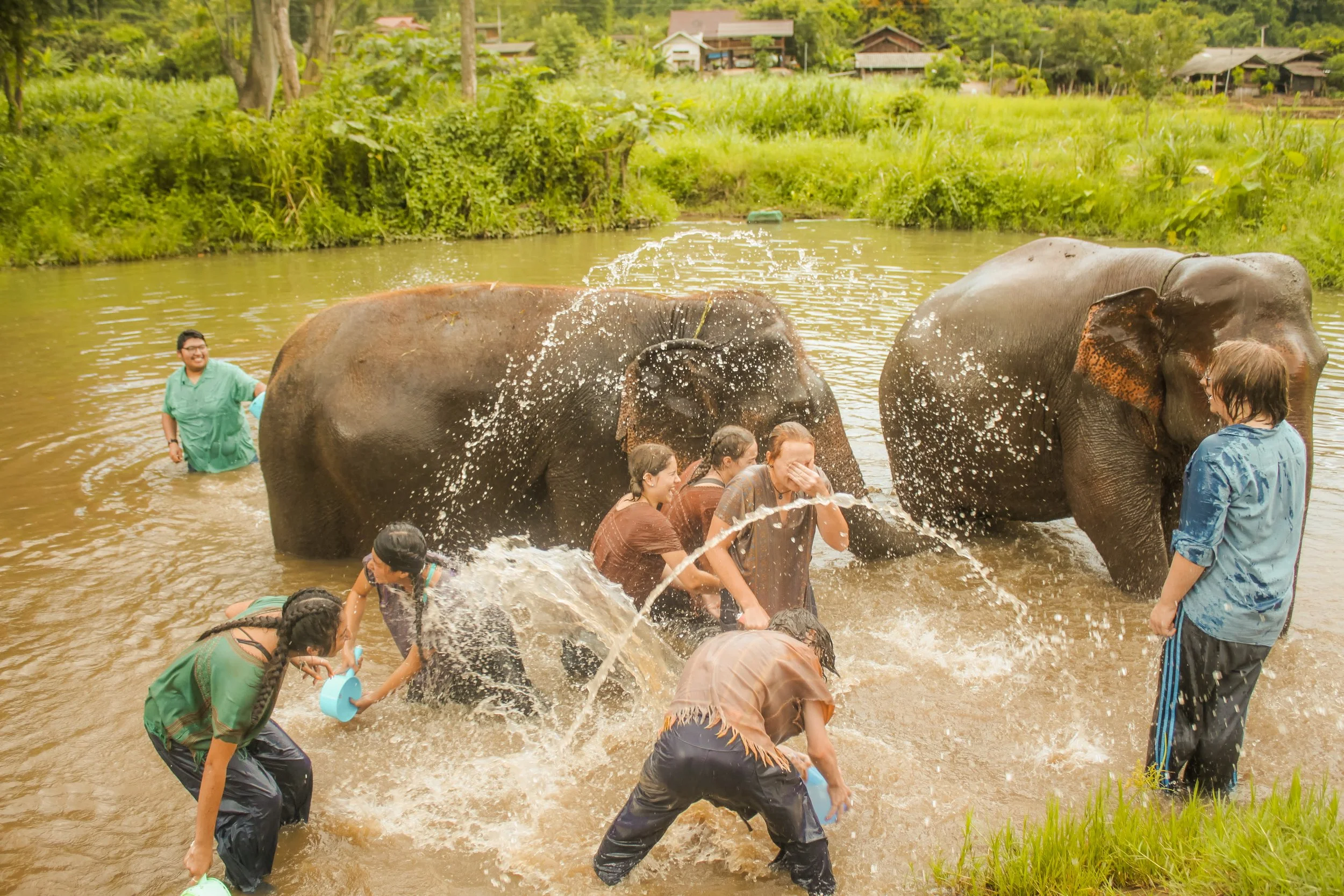
Days 15 to 17 are elephant conservation work. Students learn from local caretakers at an elephant conservation center and help with feeding, bathing, cleaning, and daily exercise.
Day 18 brings the group into another cultural setting: a conversation with Buddhist monks about mindfulness and faith, followed by traditional Thai cooking and the final banquet.
Why it fits this list: Students spend extended time in schools, learn from elephant caretakers, visit temples, speak with Buddhist monks, and experience several regions of Thailand.
Explore Thailand: Elephants, Education, and Cultural Exploration
Japan: Between Two Worlds
Japan is a 15-day high school trip that starts in Tokyo, then moves north by Shinkansen to Yamagata.
The first part of the trip introduces students to Tokyo through Sensoji Temple, Hamarikyu Gardens, Tsukiji Market, Meiji Shrine, Harajuku, Shibuya Crossing, and a day trip to Kamakura and Enoshima.
On Day 5, students ride the Shinkansen to Yamagata. From there, the itinerary shifts into regional and rural Japan: imoni cooking, Yamadera, safflower harvest and dye, haiku writing after the Basho Memorial Museum, and school exchanges with local elementary and high school students.
Day 8 includes zori sandal making with local artisans and service at a rural temple, where students learn rituals, write goshuin, and share a traditional meal with community members.
Later in the trip, students practice samurai techniques, make soba noodles, cruise the Mogami River, dress in kimono in Ginzan Onsen, hike Mount Yudono, stay overnight in a shukubo used by Yamabushi monks, participate in a Yamabushi ritual, climb Mount Haguro, and visit Sakata for a rice cracker factory tour, Sankyo rice storehouses, a seafood market lunch, and a Maiko performance.
Why it fits this list: Students move between city and rural settings, with school exchanges, artisans, temple service, cooking, traditional lodging, and regional food built into the itinerary.
Spain: Connect Through Community
Spain is a 14-day high school trip through Barcelona, Costa Brava, and rural Catalonia.
The first half begins on the coast. Students camp in the Costa Brava region, hike scenic coastal trails, visit Cadaqués, kayak through rocky coves, caves, and beaches, take on a coastal Via Ferrata route, and spend time in Palamós, a historic fishing village. In Palamós, the group visits the Museu de la Pesca and walks through the old port.
The second half is based in Barcelona. Days 8 to 12 are service days with local organizations focused on food waste redistribution and other community support projects. Students support those efforts in the mornings.
Afternoons are spent learning the city through Park Güell, Sagrada Família, local food, and flamenco. Day 13 closes with a hike in the Montserrat mountains, reflection, and the final RLT banquet.
Why it fits this list: Students see Catalonia through both the coast and the city, with service in Barcelona, food, architecture, fishing history, and Spanish immersion woven through the trip.
Explore Spain: Connect Through Community
How to choose between them
Start with the kind of cultural experience your teen is most curious about.
If they want Spanish and service, look at Peru, Costa Rica, or Spain.
If they are drawn to food, artisans, schools, and regional traditions, look at Japan or Morocco.
If they want a longer program with teaching and animal conservation, look at Thailand.
If they are younger and ready for a supported first international trip, look at Costa Rica middle school.
Then read the day-by-day. The itinerary will tell you what students actually do, where they sleep, how much service is included, and how the trip moves.
Talk with us
If you are deciding between cultural immersion trips, schedule a call.
We can talk through age range, service work, lodging, physical activity, language exposure, travel logistics, and which program fits your teen.