
Service vs. Wilderness vs. Cultural Immersion: Picking the Right Trip Theme
When families look through the RLT trip catalog, the first question is usually not “Where should my teen go?”
It is more useful to ask:
What kind of experience is your teen ready for?
Some students are pulled toward wilderness. Some want service. Some want animals. Some want language, culture, scuba, or a trip that feels physically big.
Most RLT trips blend more than one theme. That is intentional. A student may come for the rafting and discover the service work is what they talk about most. Another may choose a cultural trip and come home proudest of a hike, a meal they helped cook, or the first conversation they tried in another language.
Here is a practical way to sort through the options.
The main RLT trip themes
The current RLT catalog is organized around these program themes:
- Wilderness Adventure
- Community Service
- Animal Service
- Cultural Immersion
- Spanish Immersion
- Scuba Diving Programs
Those categories are a starting point, not a box.
A trip can be wilderness-heavy and still include service. A service trip can include rafting, hiking, or cultural exchange. A scuba trip can also include marine conservation, rainforest hiking, and local history.
The theme helps you begin. The day-by-day itinerary tells you what the trip actually asks of your teen.
Wilderness Adventure
These trips lead with movement, outdoor skill, and time in big landscapes.
A few examples:
- Norway: multi-day backpacking, sea kayaking in Geirangerfjord, and biking the Rallarvegen route
- Iceland: glacier hiking, waterfall walks, geothermal exploration, and environmental fieldwork at Skaftafell National Park
- Yellowstone: rock climbing, whitewater rafting, conservation work, and hiking in the Greater Yellowstone ecosystem
- Alaska: Matanuska River rafting, sea kayaking in Prince William Sound, Exit Glacier, and environmental service near Peterson Bay
- Maine: Acadia trail service, granite climbing, sea-cave kayaking, and a sunrise hike to Cadillac Mountain
- France & Italy: mountain refuge stays, Via Ferrata climbing, and trail restoration in the French and Italian Alps
A wilderness trip does not mean students need to arrive as experts. It does mean they should be ready for active days, shared responsibilities, simple routines, and weather.
Community Service and Animal Service
These trips put hands-on work near the center of the itinerary.
A few examples:
- Costa Rica high school: community service in the Turrialba Valley, then a three-day Pacuare River expedition
- Costa Rica middle school: several days of community service near Turrialba, then Pacuare rafting, ziplining, Cahuita, and a Bribri community visit
- Dominican Republic: construction work in the bateyes of San Pedro de Macorís, followed by public health outreach in the same communities
- Vietnam & Cambodia: home construction and English teaching in remote mountain villages
- Thailand: English teaching in rural schools, elephant sanctuary work, and marine conservation
- Colorado high school: several days based at Mission: Wolf, helping with sanctuary projects for rescued wolves
- Colorado middle school: animal care and service at Kindness Ranch
- Hawaii: native land restoration, tent camping, island ecology, and Hawaiian culture
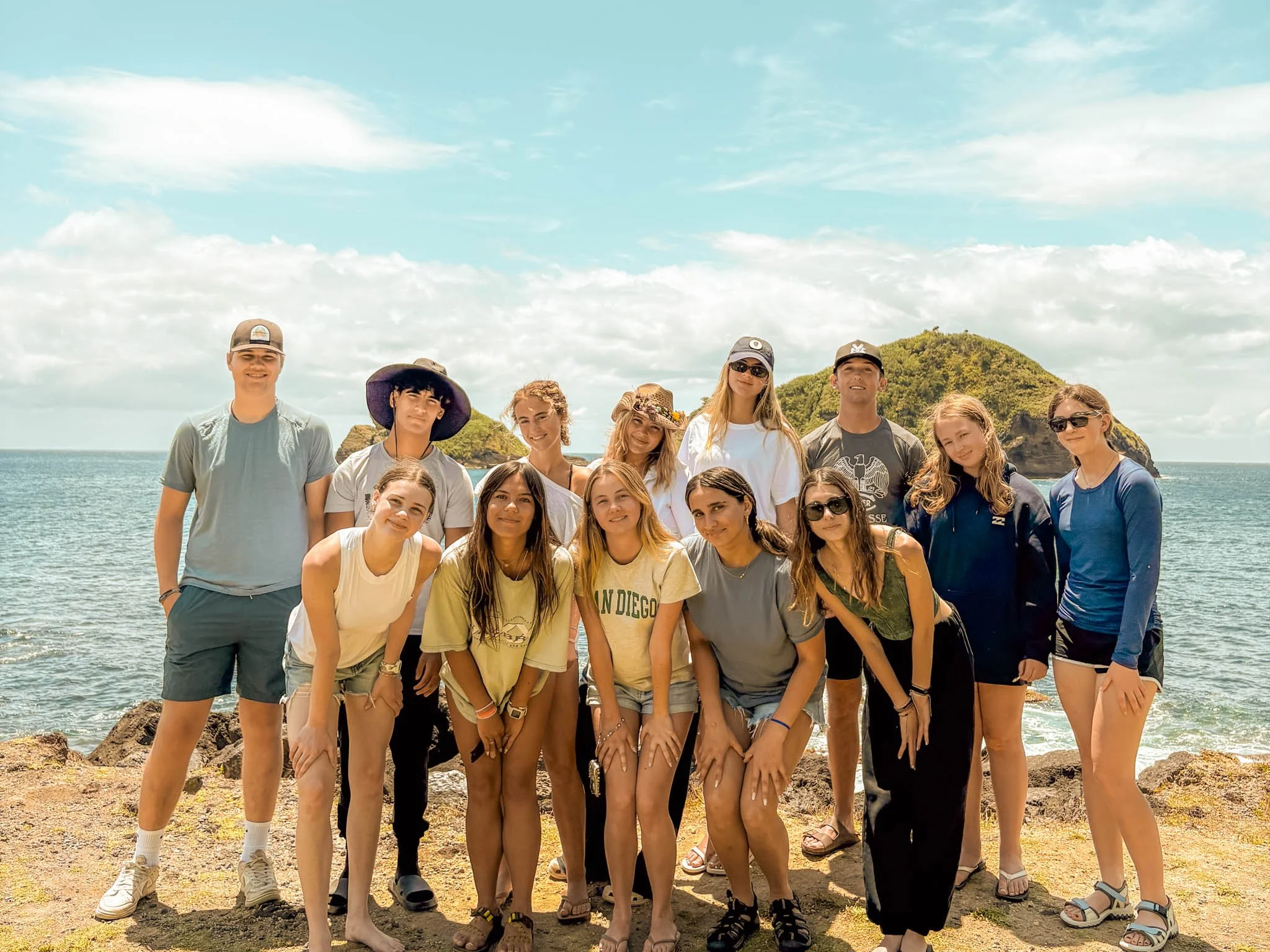
- Azores: donkey sanctuary work, crater lakes, snorkeling, and volcanic geology
- Greece: sea turtle research, beach surveys, seagrass snorkeling, and conservation work with marine biologists
For service trips, we encourage families to read the itinerary closely. The kind of work matters. So does the number of days spent with the partner.
Cultural Immersion and Spanish Immersion
These trips ask students to pay attention to how people live, eat, speak, work, remember, and move through a place.
A few examples:
- Peru: co-teaching English and digital literacy in rural Andean schools, homestay nights with Sacred Valley families, and Machu Picchu as cultural and historical context
- Spain: Barcelona food-distribution service, Costa Brava Via Ferrata, Posidonia seagrass snorkeling, Park Güell, and flamenco
- Japan: rural service, safflower dyeing, temple grounds care, and cooking traditional dishes with elders
- Morocco: trekking in the High Atlas Mountains, service with Berber communities, Sahara desert camping, and cultural immersion
- Celtic Isles: coastal hiking in Ireland, Scottish Highland exploration, Celtic music, and storytelling
- Costa Rica and Puerto Rico: Spanish exposure woven through service, local partners, food, and daily travel routines
Spanish Immersion does not mean every student arrives fluent. It means language is part of the experience, and students should be open to listening, trying, and making mistakes.
Scuba Diving Programs
These trips are built around dive training and marine ecosystems.
A few examples:
- Italy: PADI open-water diving certification, marine conservation in Sardinia, and cultural time in Rome
- Puerto Rico high school: PADI open-water diver certification, coral reef restoration, bioluminescent bay kayaking, and El Yunque
Scuba trips are a good fit for students who are comfortable in the water and ready for structured skill-building. The diving is not just a one-day activity. It shapes the rhythm of the trip.
How the blending actually works
Most RLT trips are not only one thing.
That is why reading the full day-by-day matters.
A few examples:
- Costa Rica high school: community service in Turrialba, then surfing, a Bribri community visit, and a three-day Pacuare River expedition
- Greece: Athens, Ionian sea kayaking, sea turtle conservation, snorkeling, and Kefalonia
- Thailand: English teaching, elephant care, marine conservation, and cultural travel
- Iceland: glacier hiking, geothermal exploration, waterfall walks, and environmental fieldwork at Skaftafell
- Spain: food-distribution service in Barcelona, Costa Brava climbing, seagrass snorkeling, and cultural time in the city
- Alaska: cultural learning at the Alaska Native Heritage Center, rafting, kayaking, glacier hiking, and environmental service
The blend is often what makes the trip work. Students are not doing the same thing every day, but the trip still has a clear shape.
Three questions that help narrow the choice
1. Does your teen want more time outside or more time with people?
Some students want mountains, rivers, tents, and trail time. Others are drawn to community service, cultural exchange, local partners, or animal care.
Many want both. The question is which one should lead.
2. What kind of challenge is useful right now?
Some students are ready for physical challenge: backpacking, rafting, climbing, diving, paddling, or long active days.
Others are ready for a social or cultural challenge: being away from home, traveling without phones, practicing a language, sharing meals with a host community, or learning how to contribute in a new setting.
Both are real.
3. Is domestic or international the right first step?
A domestic trip can be a strong first RLT experience because it removes some logistics: passport, customs, international flights, and larger cultural adjustment.
An international trip can be right for a student who has been away from home before, is curious about other cultures, and is ready for the extra layer of travel.
The right answer depends on the student.
Quick ways to start
My teen wants wilderness and physical challenge.
Look at Norway, Iceland, Yellowstone, Alaska, Maine, France & Italy, and California.
My teen wants service.
Look at Costa Rica, Dominican Republic, Vietnam & Cambodia, Thailand, Colorado, Hawaii, Spain, Greece, and Peru.
My teen wants animal or wildlife-focused work.
Look at Colorado high school, Colorado middle school, Thailand, Azores, and Greece.
My teen wants Spanish exposure.
Look at Costa Rica, Puerto Rico, Spain, Peru, and Dominican Republic.
My teen wants scuba.
Look at Italy and Puerto Rico high school.
My teen wants culture and place.
Look at Japan, Morocco, Peru, Spain, Greece, Celtic Isles, Costa Rica, and Puerto Rico.
What to do after you pick a theme
Once you have a short list, read each trip page carefully.
Look at:
- Grade range
- Trip length
- Service hours
- Accommodations
- Physical activity
- Water activities
- Passport or paperwork needs
- Phone policy
- Day-by-day itinerary
Then call us.
We can talk through what the trip really feels like, which students tend to do well on it, and whether it matches your teen’s age, readiness, and interests.