
Domestic vs. International Teen Travel: How to Choose for First-Time Travelers
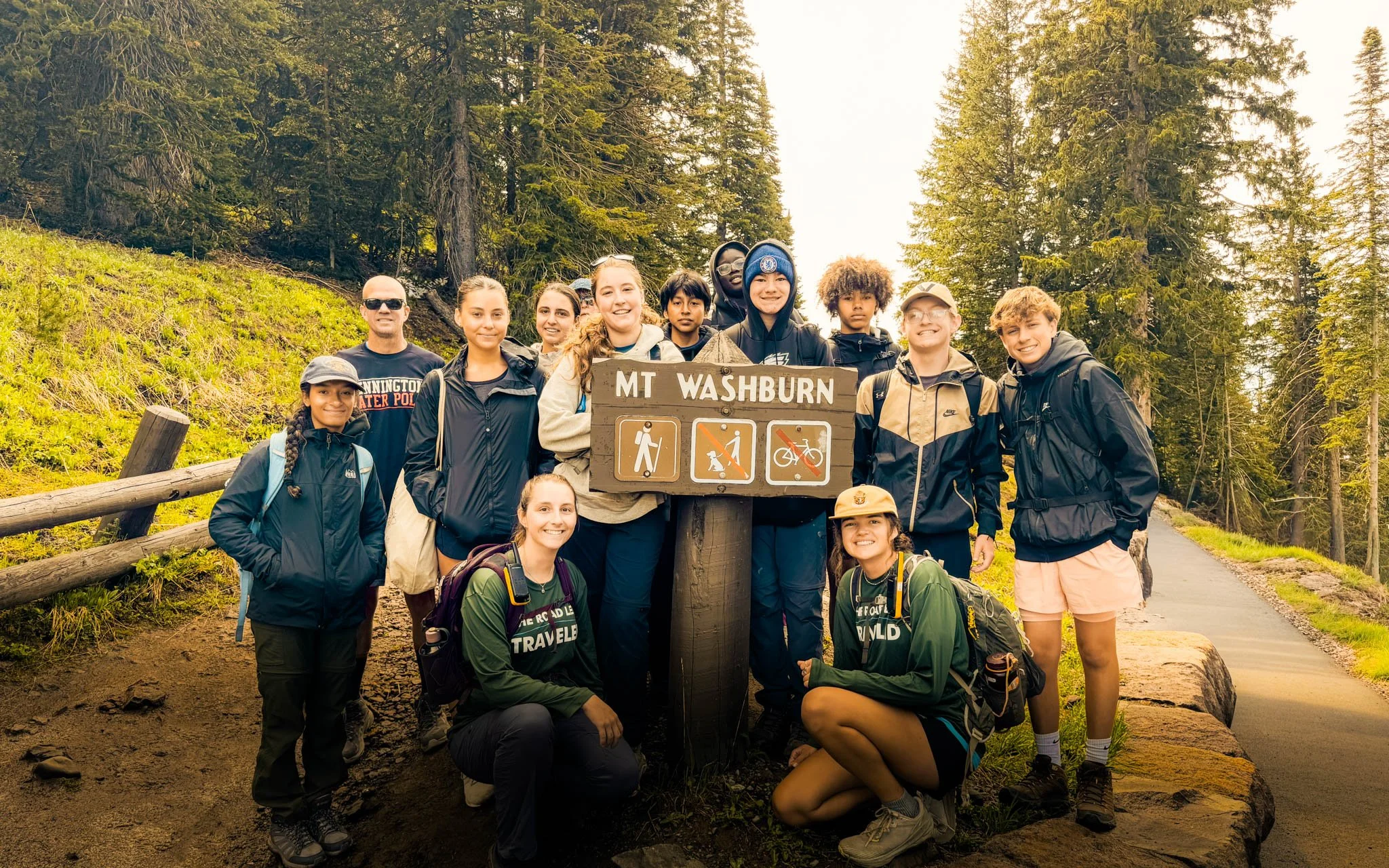
“Should we choose a domestic trip or an international trip for our teen traveler?”
That is one of the first real questions families ask us.
The honest answer is that either can work. What matters most is not the passport stamp. It is where your teen is right now.
Have they been away from home before?
Have they lived with a group before?
Are they excited by unfamiliar food, language, and travel days?
Would they do better with one big stretch first, like camping and group living, before adding international travel?
Here is how we think about the choice.
1. Domestic trips can be a good first step
For a teen who has not spent much time away from home, a domestic trip can make sense.
They still get the core RLT experience: small-group travel, phone-free days, shared meals, service, outdoor activity, and leaders who are with the group throughout.
But they do not also have to manage international travel, customs, a passport, a larger time change, or the extra layer of being in a country where routines may feel less familiar.
That can help a first-time traveler focus on the main work of the trip:
Learning to live with a group.
Sleeping in a tent or shared space.
Helping cook and clean.
Carrying personal gear.
Doing service.
Hiking, paddling, climbing, rafting, or traveling without a parent nearby.
Maine is our shortest trip at 7 days, which can be a useful first RLT experience for some students. Colorado, Yellowstone, Alaska, California, and Puerto Rico are also domestic programs, each with a different level of adventure, service, lodging, and physical demand.
Domestic does not mean easy. It means closer to home in the logistical sense.
For domestic programs, a passport is not needed. Trip insurance is not required, but RLT strongly encourages families to consider it. Students should be up to date on required paperwork, health forms, routine immunizations, and the tetanus booster guidance listed in RLT materials.
2. International trips can work well for teens who are ready for another layer
Some first-time RLT students are ready for international travel.
A teen who has been to sleepaway camp, traveled abroad with family, handled long travel days, or lived comfortably in a group may be ready for the added layer of an international program.
That layer can include:
Language exposure.
Different food and daily routines.
Cultural exchange.
International airports.
Passport and entry requirements.
More time adjusting to place.
Costa Rica, Peru, Greece, Iceland, Spain, Thailand, Japan, Vietnam and Cambodia, and other international trips all ask students to pay attention in ways that go beyond the activity list.
They are not only hiking, rafting, serving, diving, teaching, or exploring. They are also learning how to be a guest in another country.
That matters.
The right international trip is not always the farthest one or the longest one. It is the one that matches your teen’s age, readiness, interests, and comfort with challenge.
3. The real difference is not distance
A domestic trip can still be a big step.
A student might spend 14 days camping in Colorado, working at Mission: Wolf, rafting Browns Canyon, hiking Cottonwood Pass, visiting Great Sand Dunes National Park, and living without a phone.
Another student might spend 7 days in Maine, camping in Acadia, doing trail service, kayaking the coastline, and hiking Cadillac Mountain.
That is real travel.
International trips add another kind of learning. Students may practice Spanish in Costa Rica or Peru, learn from Bribri community members about cacao, work with sea turtle conservation partners in Greece, visit historic sites in Spain or Japan, or spend time in rural schools and villages in Southeast Asia.
Both domestic and international trips can ask a lot of a teen.
The question is which kind of challenge is useful right now.
4. Cost and logistics matter
Cost should be part of the decision.
For , published RLT tuition examples range from $3,150 for Maine to $7,495 for longer programs like Thailand, Vietnam and Cambodia, and Norway. Other examples include Colorado high school at $5,295, Yellowstone at $5,495, Costa Rica high school at $5,995, Alaska at $6,495, and Peru at $6,295.
Each of our trip pages lists the current tuition, what is included, and what families should plan for separately.
International trips often have more logistics: passports, possible visa paperwork, international flights, travel insurance, and destination-specific health guidance. Some international programs also include internal flights or added travel costs. Domestic trips have fewer entry requirements, but families still need to plan for airfare or travel to the meeting city, baggage fees, personal gear, spending money, and optional travel insurance.
For international travel, RLT requires a passport that is valid for at least 6 months after the trip end date. Trip insurance is required for all international programs.
Some international programs require tourist visas. RLT provides specific directions after application and acceptance. Families should not apply for a tourist visa until RLT gives explicit instructions.
5. Passport timing is worth handling early
If your teen does not have a passport yet, start early.
The U.S. State Department currently lists routine passport processing at 4 to 6 weeks and expedited processing at 2 to 3 weeks. Mailing time is not included in those estimates, and the State Department notes that mailing can add time on both ends.
That means “we have six weeks” is not the same as “we are all set.”
For any international trip, check the passport now. Make sure it does not expire within 6 months after the trip ends.
A few practical questions
Can my teen do an international trip without much travel experience?
Sometimes, yes. It depends on the teen and the trip. We would want to talk through how they do away from home, how they handle group living, whether they are comfortable with unfamiliar food and routines, and how they respond when plans shift.
Is domestic better for anxious travelers?
Not always, but it can be. A domestic trip removes some logistical layers, which may help a student focus on the group, the activities, and being away from home. For some students, that is the right first step.
Is an international trip more meaningful?
No. It is different.
A domestic trip can be deeply challenging and useful. So can an international trip. The value comes from the fit, the leaders, the work, the group, and how ready your teen is to engage.
What about jet lag?
International travel can involve time changes and longer travel days. The effect varies by destination and student. RLT itineraries are planned with arrival, orientation, and group adjustment in mind, but students should still expect the first day or two to feel different from home.
What health preparation is needed?
RLT follows CDC guidance for international travel and encourages families to check in with a pediatrician, physician, or travel health specialist. Country-specific health information is provided during the admissions process and by email.
How do we choose?
Look at each trip page carefully. Then ask us direct questions:
- How rustic is the lodging?
- How physically active is the trip?
- How much service is included?
- How much time is spent camping or in shared housing?
- What kind of travel days are involved?
- Does the trip require a passport, visa, or special health preparation?
- What kind of student tends to do well on this program?
A good fit is not about picking the biggest trip. It is about picking the trip your teen can step into with the right mix of readiness and stretch.
Explore our trips
Start with our trip pages, then schedule a call.
We can talk through domestic options, international options, first-time traveler fit, lodging, activity level, service work, paperwork, and what makes sense for your teen this summer.