
Service Work on RLT Trips: What Teens Actually Do
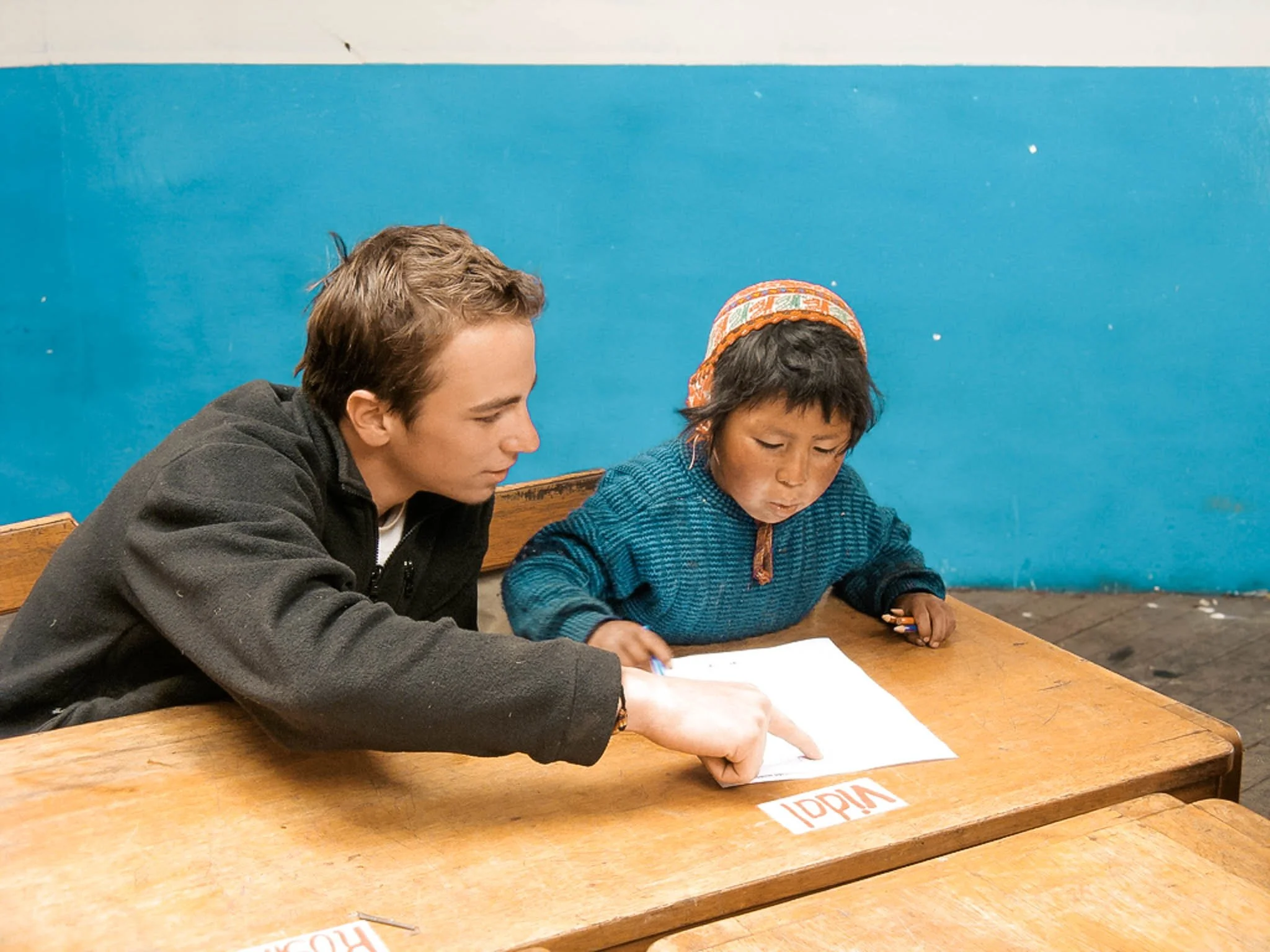
Real service usually looks quieter than a photo op.
It can look like hauling gravel, cleaning an animal enclosure, helping prep a group meal, weighing children during a health project, watching a scientist mark a sea turtle nest, or standing next to a community partner while they explain what needs to happen next.
When families ask us what makes RLT service different, this is where we start:
The project has to matter to the people and places we are serving.
The community helps define the work
We do not design a service project first and then look for a community to fit it.
The work starts with the partner.
What do you need help with this season?
What can students safely and respectfully contribute?
What work is useful, even if it is not the easiest thing to explain in a brochure?
That approach changes the feel of the trip.
On Colorado high school, students spend several days based at Mission: Wolf, helping with projects like feeding wolves, chopping firewood, fencing, and basic construction.
On Colorado middle school, students begin at Kindness Ranch, where service may include cleaning, walking and socializing animals, planting trees, painting, mowing, fencing, or small-scale construction, depending on what the sanctuary needs during the visit.
On Costa Rica high school, students spend several days in the Turrialba Valley, partnering with local families and community leaders on projects that may include chicken coops, compost systems, furniture, or small structures. They camp on community land and eat meals cooked by local partners.
On Dominican Republic, students work in the bateyes of San Pedro de Macorís. The itinerary includes infrastructure projects like digging foundations, mixing and pouring cement, laying cinder blocks, painting, plastering, latrine work, floors, or educational exchanges with kids. Later in the trip, students support public health projects by helping weigh and measure children, distribute vitamins, and run health workshops for youth.
On Greece, students work with local scientists on sea turtle and marine conservation. Early mornings are spent surveying beaches to identify and monitor nests. Afternoons may include observing turtles in the harbor, snorkeling over seagrass meadows, and collecting ecological data.
On Vietnam and Cambodia, students support hands-on community service in Binh Lieu through home construction, tree planting, and building paths. In Cambodia, the itinerary includes rural road projects, teaching English, and time in local schools and villages.
On Thailand, students spend five days teaching English to elementary-age students, then later work with local caretakers at an elephant conservation center, helping with feeding, bathing, cleaning, and daily exercise.
The details change by destination, partner, season, and need. That is the point.
Service is not a fixed performance. It is work inside a real place, with people who know what is useful.
The work is part of the trip, not a side stop
Service days are built into the itinerary from the start.
They are not squeezed in at the end so we can say the trip includes volunteering.
On Costa Rica high school, Days 2 to 7 are rooted in community service in the Turrialba Valley.
On Greece, Days 10 to 15 are focused on turtle and marine conservation in Kefalonia.
On Dominican Republic, the service is split into two clear stretches: community infrastructure projects in the bateyes, then public health outreach in the same region.
On Colorado high school, the Mission: Wolf stretch shapes the whole first half of the trip.
That time matters. Students need a few days to understand the routine, learn how the partner wants things done, and see that service is not always dramatic. Sometimes it is repeating the same task because the task still needs doing.
We are honest about what teens contribute
Teenagers can do useful work.
They can also overestimate what a two-week trip can solve.
We try to be clear about both.
Students bring time, energy, attention, and a willingness to learn. They can haul, paint, clean, plant, teach, paddle to a survey site, help care for animals, or support a community project already in motion.
They do not arrive as experts.
They do not solve a community’s challenges in one trip.
That is not what we are asking them to do.
The value is in the partnership. Local staff, community leaders, conservation teams, sanctuary staff, and host organizations guide the work. RLT students support that work and learn from the people who understand it best.
That is why listening matters as much as effort.
Reflection is part of the service
Students are not just logging hours.
They are also learning how to think about service with more care.
Why did this partner ask for this project?
What work continues after our group leaves?
What did we assume before we arrived?
What did we learn from the people leading the work?
What does useful help look like when we are guests?
Those questions come up in conversation, during meals, after long work days, and in group reflection.
We do not need to make every moment feel like a classroom. But we do want students to pay attention.
Students receive service recognition
RLT is an official certifying organization for the President’s Volunteer Service Award.
Each student who follows RLT behavior guidelines and successfully completes a community service program with RLT receives a group Presidential Volunteer Service Award for their contribution.
Families also receive documentation of service hours for the trip.
Questions to ask about service on any teen travel program
If service is an important part of your decision, ask specific questions:
- Who chooses the service project?
- What does the local partner need help with right now?
- How many service hours are included?
- What will students actually do with their hands?
- Who supervises the work?
- What happens if the partner’s needs change?
- Does the work continue after the student group leaves?
- How do students reflect on what they are learning?
A good program should be able to answer those questions clearly.
Talk with us
If service is the heart of what you are looking for this summer, schedule a call.
We can talk through the trips with the strongest service focus, what the work looks like day to day, and which program fits your teen.