
3 Things Families Don't Know About Our Colorado Middle School Trip
On Day 1, students land in Denver, meet their leaders and group, and travel north to Wyoming.
That first stop matters.
Before the hiking, paddleboarding, farm work, and rafting, the group spends several days at Kindness Ranch, a sanctuary for rescued animals. Students help with daily care, learn the rhythms of the ranch, and begin the trip with work that is steady, specific, and close to the animals.
Here are three things families may not know about our Colorado middle school trip.
1. The trip starts with animal care at Kindness Ranch
Days 1 to 5 are based at Kindness Ranch in Wyoming.
Day 1 is arrival, travel from Denver, a tour of the sanctuary, orientation, and setting up camp. From Days 2 to 5, students support daily care for rescued cats, pigs, horses, goats, llamas, chickens, ducks, dogs, and other animals.
The work changes based on what the sanctuary needs during our visit. Students may help with cleaning, walking, and socializing animals. Other projects may include planting trees, painting, mowing, fencing, or small-scale construction.
That variety is important. Animal care is not only feeding or petting animals. It is cleaning spaces, following instructions, moving calmly, paying attention, and doing the unglamorous work that keeps a sanctuary running.
For many middle school students, that is a useful way to begin a trip. They have a job. They can see what needs doing. They learn that helping sometimes looks like a broom, a fence line, a water bucket, or a quiet walk with an animal.
2. The middle of the trip moves into Rocky Mountain National Park
After Kindness Ranch, the group heads into Rocky Mountain National Park for Days 6 to 9.
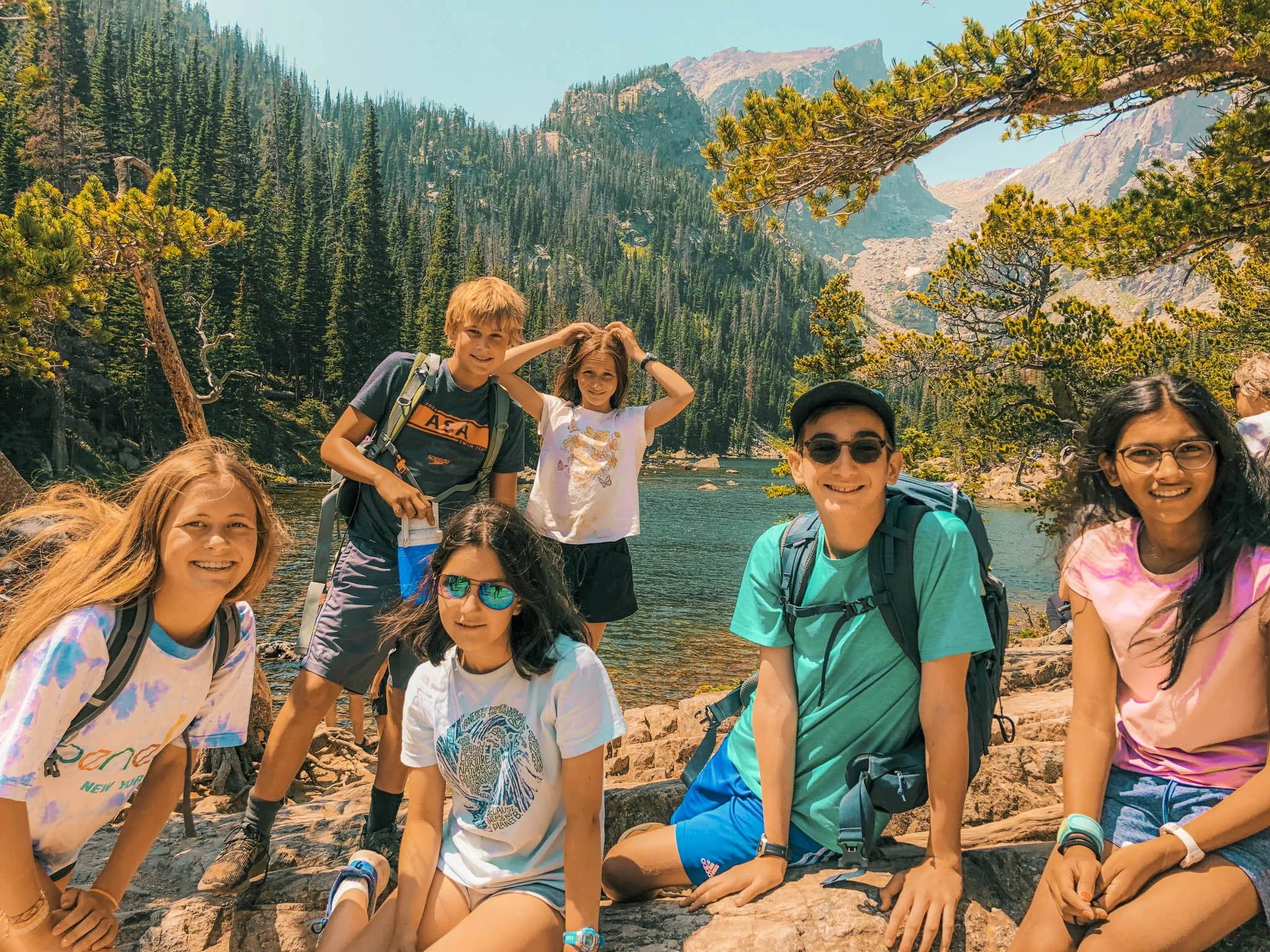
This stretch is built around hiking, swimming, camping, and time outside. The group explores Pawnee Grasslands and Arthur’s Rock Trail, takes in views of the Continental Divide, and spends evenings cooking over camp stoves.
It is still a middle school trip. The pacing is designed for students completing grades 6 to 8, not older teens. Leaders teach the routines: how to keep track of gear, how to help with meals, how to move as a group on trail, and how to speak up if something feels off.
The camping matters here too. Students are not just visiting a park for a few hours. They are sleeping outside, waking up with the group, helping cook, cleaning up, and learning how to live with other people in a simple routine.
That is often where the trip starts to feel different from a vacation.
3. The last stretch adds paddleboarding, farm work, and rafting
Day 10 is spent at Horsetooth Reservoir near Fort Collins. Students swim, relax, and learn to stand-up paddleboard in a calm setting.
Days 11 and 12 shift to a local farm, where the group supports seasonal tasks and learns about sustainable farming and food systems. Depending on the needs at the time, students may help with planting, harvesting, day-to-day chores, and time with farm animals and local staff.
Day 13 is the final big activity: whitewater rafting on the Cache la Poudre River, Colorado’s only designated Wild and Scenic River. The group rafts with professional outfitters and navigates rapids together before the trip wraps up.
Day 14 is travel home from Denver.
Accommodations and expectations
Accommodations. The group stays in a mix of campgrounds and group housing across Colorado and Wyoming. The trip begins with 9 nights of tent camping at Kindness Ranch and in Rocky Mountain National Park. At the end of the trip, students spend 4 nights in Airbnb-style group housing near Fort Collins.
Bathrooms and showers. The sleeping and bathroom setup is simple. Students share tents and rooms divided by gender, with rustic bathrooms and showers every 2 to 3 days.
Food. Meals are planned and prepared as a group with staff support. Students rotate through cooking duties. Meals may be cooked in kitchens or on camp stoves, depending on where the group is staying.
Animal care. Service at Kindness Ranch is hands-on and guided by sanctuary needs. Students may help with cleaning, walking and socializing animals, planting trees, painting, mowing, fencing, or small-scale construction.
First-time outdoor experience. Prior camping or outdoor experience is not required. This trip is built for middle school students completing grades 6 to 8. Leaders teach the routines early.
Physical demands. Students should be ready for active days outside, hiking, camping, group chores, and sanctuary projects that may involve standing, walking, and light lifting.
Packing. We recommend one checked soft duffel bag, not a rolling suitcase, plus a small carry-on backpack. Families bring personal clothing, toiletries, a sleeping bag, and a sleeping pad. RLT provides group gear, including tents, cooking equipment, and specialized activity gear needed for the trip.
How to talk to your student about this trip
Before they go, you might say:
“You’ll start at an animal sanctuary in Wyoming, then head into Colorado for hiking, paddleboarding, farm work, and rafting. You’ll camp for much of the trip, help with meals, and be part of a group. The leaders will teach you the routines, but you’ll be expected to help.”
After they come home, ask:
“What did Kindness Ranch need help with while you were there?”
“What was harder than you expected?”
“What did your group cook?”
“What was the rafting day like?”
Explore the Colorado middle school trip
For dates, tuition, itinerary, accommodations, and packing details, see the full Colorado Middle School itinerary.