
3 Things Families Don't Know About Our Puerto Rico High School Trip
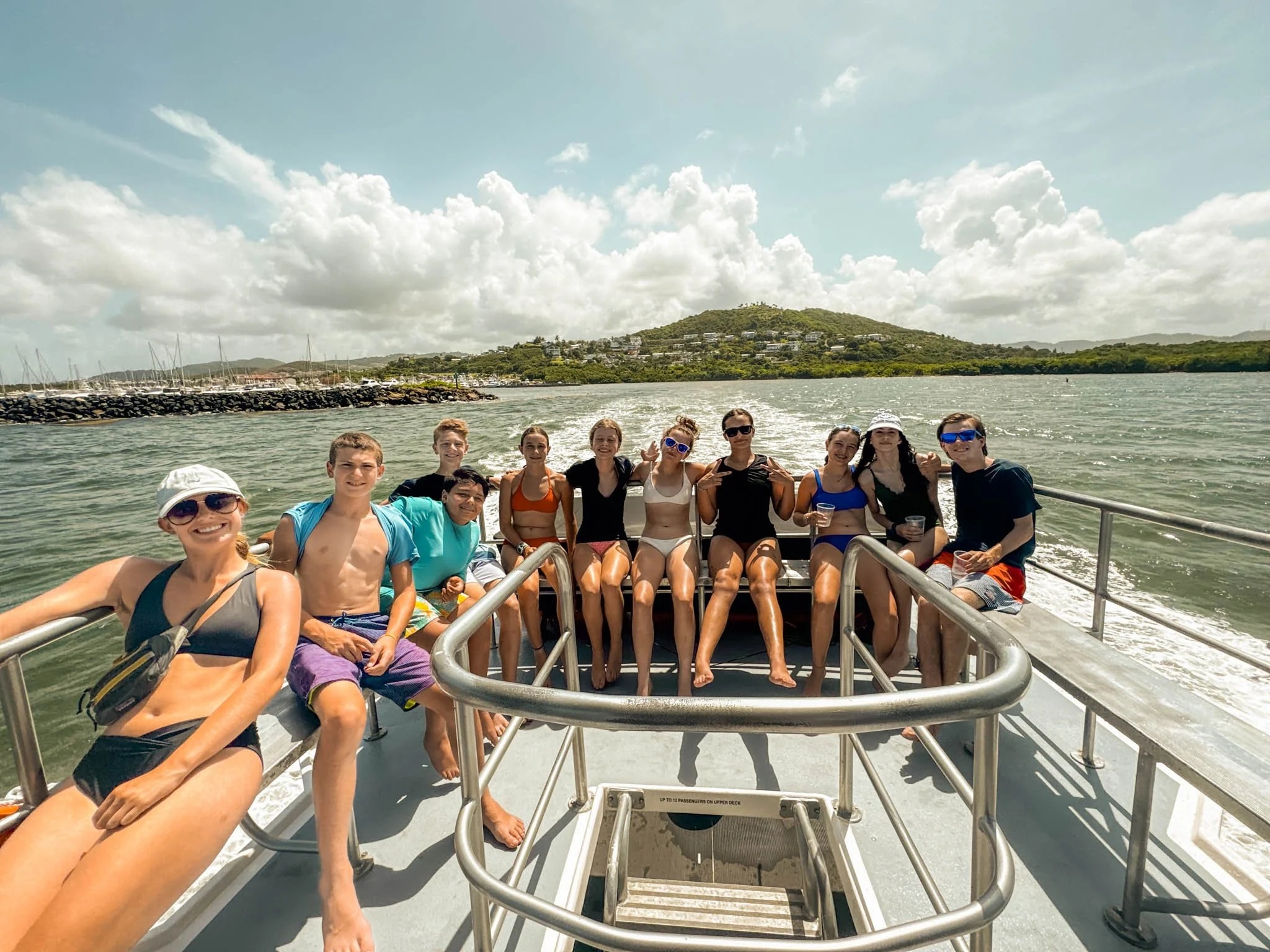
The anchor of our Puerto Rico high school trip is scuba training.
Students spend several days working with PADI instructors toward open water dive certification. That training changes how they move through the rest of the trip: snorkeling at El Escambrón, service with environmental partners, paddleboarding Condado Lagoon, hiking through El Yunque, and spending time along Puerto Rico’s coast.
This is not only a dive trip. It is also a 14-day look at Puerto Rico through water, land, history, service, and group living.
Here are three things families may not know before reading the full itinerary.
1. Students train with PADI instructors
Days 3 to 6 are focused on scuba training.
New divers work toward certification. Returning divers build deeper skills. Each day includes open water dives, classroom sessions, and time to reset with the group.
That structure matters. Scuba is not something students just “try” for an afternoon. They learn from instructors, practice in the water, and build the habits needed to dive safely and calmly.
For students who are comfortable in the water, this can be one of the clearest skill-building parts of the summer. They can see the progression from first instruction to open water training over several days.
2. The service connects back to the ocean
Days 8 to 10 are environmental community service.
After several days in the water, students shift into work with local environmental organizations. The exact projects can vary, but past examples include native species restoration, coral reef restoration, fish and seagrass identification, and other work connected to protecting Puerto Rico’s land and water.
That sequence is important.
Students do not begin service in the abstract. They have already spent time seeing reefs, marine life, beaches, and coastal ecosystems up close. Then they support organizations working to restore and protect those places.
The trip includes 10 to 20 service hours.
3. Puerto Rico is more than the diving
The trip starts in San Juan, then moves quickly into place.
Day 2 is El Yunque National Rainforest, with trails, pools, waterfalls, and time learning about local flora and fauna. The group also keeps an eye out for the native coqui tree frog.
Day 7 brings students into Old San Juan, followed by snorkeling at El Escambrón Beach.
Day 11 includes paddleboarding in Condado Lagoon and a visit to the Caguana Ceremonial Indigenous Heritage Center.
The itinerary also includes kayaking through the bioluminescent bay in Fajardo and spending time among mangroves. Because natural conditions can affect any outdoor activity, we talk about it as a planned highlight, not a guaranteed light show.
Days 13 and 14 close the trip with the Pterocarpus Forest, beach time, a final group meal, reflection, and travel home from San Juan.
What families should know before applying
Trip length and grade range. This is a 14-day trip for high school students completing grades 9 to 12.
Service hours. 10 to 20 hours of service work.
Accommodations. Students stay in private, locally owned Airbnb-style housing throughout the trip. Rooms are shared and divided by gender.
Bathrooms and showers. Bathrooms are shared and basic, with access to showers every 1 to 2 days. RLT encourages water conservation throughout the trip.
Food. Meals are prepared together in guesthouse kitchens or outdoor spaces. A rotating cook crew helps plan, prep, cook, and clean with leader support.
Diving prep. Students do not need previous scuba experience. They should be comfortable in the water and ready for several days of structured dive training. For scuba specifically, a doctor sign-off is required for any medical conditions.
Gear. RLT provides specialized activity equipment needed for the trip. Families are responsible for personal clothing, toiletries, and individual gear. A detailed packing list is sent after enrollment.
Flights. Families book flights to and from San Juan, Puerto Rico. We use SJU as the airport and ask families not to book flights until RLT provides official travel windows.
Passport. U.S. citizens do not need a passport for Puerto Rico because it is a U.S. territory.
Phones. RLT programs are phone-free. Leaders collect phones and personal devices on Day 1 and return them at the end of the trip. Digital cameras and GoPros are welcome as long as they are not internet-connected.
Questions families often ask
Does my teen need diving experience?
No. New divers work toward certification during the trip. Water comfort matters more than prior dive experience.
What if my teen already has scuba experience?
Returning divers build deeper skills during the PADI training portion of the trip.
Is this a service trip too?
Yes. The trip includes 10 to 20 service hours with environmental community service connected to Puerto Rico’s land and water.
What if my teen has asthma, ear issues, heart history, seizure history, or another medical condition?
For scuba diving specifically, doctor sign-off is required for any medical conditions. Reach out before enrolling so we can talk through what is needed.
Is this trip mostly in hotels?
No. Students stay in private, locally owned Airbnb-style housing with shared rooms, shared bathrooms, and group meals.
How to talk to your teen about this trip
Before they go, you might say:
“You’ll spend several days training with PADI instructors, then do environmental service connected to Puerto Rico’s land and water. You’ll hike in El Yunque, snorkel, paddleboard, visit cultural and historic sites, and live in shared group housing. You don’t need to be a diver already, but you do need to be comfortable in the water.”
After they come home, ask:
“What was the scuba training like?”
“What did you notice underwater after learning more about the reef?”
“What environmental service project did your group work on?”
“What was El Yunque like after being near the coast?”
Explore the Puerto Rico high school trip
For dates, tuition, itinerary, accommodations, packing details, paperwork, and the technology policy, see the full Puerto Rico High School itinerary.