
3 Things Most Families Don't Know About Our Vietnam & Cambodia Trip
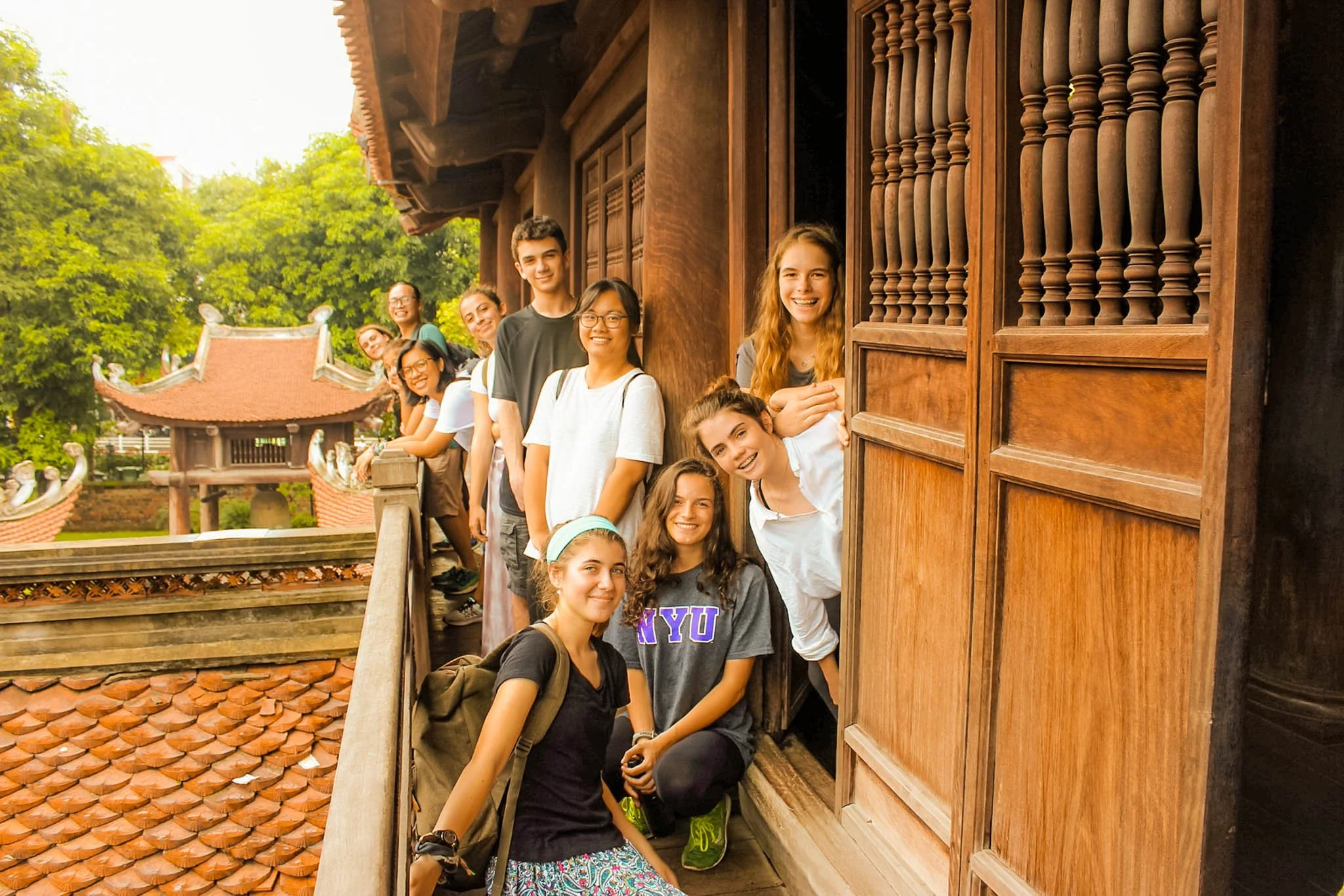
Vietnam & Cambodia is a 21-day high school trip for students completing grades 9 to 12.
The trip moves through Hanoi, Ninh Binh, Binh Lieu, Halong Bay, Hoi An, Siem Reap, Angkor, Tonle Sap Lake, and Kulen Mountain. Service comes in two main stretches: mountain village projects in northern Vietnam, then school and village work in Cambodia.
It is not only a temple trip. It is not only a service trip. The itinerary gives students time to work, travel, hike, cook, paddle, and understand more than one part of Southeast Asia.
Here are three things families may not know before reading the full itinerary.
1. Students spend several days volunteering in mountain villages
Days 4 to 6 are focused on service in Binh Lieu, a mountain region in northern Vietnam.
Students support hands-on community projects such as home construction, planting trees, and building paths. The group works alongside local partners and community members, contributing to projects already in motion.
This is also where students begin to understand the slower rhythm of rural travel. In Binh Lieu, the group stays in a traditional village bunkhouse for 4 nights, with bunks and twin beds in a large communal space, home-cooked meals, and close daily contact with local families.
The accommodations are simple. The work is practical. Students should be ready to help, listen, and adapt to the pace of the community around them.
Day 7 continues the northern Vietnam stretch with a jungle trek, waterfalls, and kayaking on the Tien Yen River.
2. Cambodia brings a second service stretch
After Vietnam, the group flies to Siem Reap and begins the Cambodia portion of the trip.
Days 12 to 14 are focused on service in local schools and villages. Expect rural road projects, English teaching, and a visit to a local silk farm, followed by a final handoff celebration.
That second service stretch matters because students are not doing one project in one country and then only sightseeing afterward. They are asked to show up again in a new setting, with new people, new routines, and a different local context.
The full trip includes 20 to 30 service hours.
3. The cultural travel is layered between the service work
The itinerary includes several major cultural and outdoor experiences, but they are not all packed into one rushed ending.
Days 1 and 2 begin in Hanoi, with a welcome dinner, a jeep tour, historic sites, and time walking through the Old Quarter.
Day 3 takes the group near Ninh Binh to bike through rice paddies, float through limestone caves, and explore cliffside temples.
Days 8 and 9 are Halong Bay. Students sail past limestone karsts, explore caves by boat, and spend one night on a boat before flying south to Hoi An.
Day 10 is Hoi An, with biking through countryside villages, rowing bamboo boats in the coconut forest, and walking the preserved ancient streets.
Days 15 to 21 move through Cambodia’s temples, mountains, water villages, markets, and food traditions. Students visit Angkor Wat and Ta Prohm, hike Kulen Mountain, swim in a jungle waterfall, float through stilt villages, and cook alongside local chefs before returning to Hanoi.
The service gives students a different way to enter those places. They have already worked beside local partners, stayed in a village bunkhouse, eaten with host families, and spent time in schools and communities before they reach the most famous sites.
What families should know before applying
Trip length and grade range. This is a 21-day trip for high school students completing grades 9 to 12.
Tuition. $7,495 for our 2026 Vietnam & Cambodia trip.
Service hours. 20 to 30 hours of service work.
Locations. The trip travels through Vietnam and Cambodia, including Hanoi, Ninh Binh, Binh Lieu, Halong Bay, Hoi An, Siem Reap, Angkor, Tonle Sap Lake, and Kulen Mountain.
Travel. All participants fly together from San Francisco to Hanoi, Vietnam. Do not book flights until RLT sends official flight windows.
Internal flights. The trip includes additional internal flights. RLT confirms these, books them on behalf of the group, and applies the charge to a final invoice.
Accommodations. Students stay in a mix of simple hotels, a traditional village bunkhouse in Binh Lieu, and one overnight boat in Halong Bay.
Binh Lieu lodging. The group spends 4 nights in a traditional village bunkhouse, with bunks and twin beds in a shared communal space.
Halong Bay lodging. Students spend one night on a boat during the Halong Bay portion. Rooms are shared by 2 to 3 students, divided by gender, with private bathrooms onboard.
Bathrooms and showers. Accommodations include access to short showers every 1 to 2 days.
Food. All meals are included. Students eat at local restaurants, community kitchens, and with host families. During homestay days, students help prepare simple breakfasts. Safe drinking water is provided throughout the trip.
Dietary needs. RLT can accommodate dietary needs, including vegetarian, gluten-free, dairy-free, nut-free, and more. Families should share needs in advance.
Packing. RLT recommends one checked soft duffel bag, not a rolling suitcase, plus a small carry-on backpack. Students bring personal clothing, toiletries, and individual gear. RLT provides group gear and specialized activity equipment needed for the trip.
Passport. A valid passport is required and must be valid for at least 6 months beyond the return date.
Trip insurance. Trip insurance is required for international travel.
Vaccinations and medications. Families should make sure students are up to date on routine immunizations, including a tetanus booster within the past 10 years. It also notes that travel to Vietnam and Cambodia typically includes recommendations for additional vaccinations and medications, such as malaria medication. Families should review current CDC guidance and consult a physician or travel nurse before departure.
Phones. This program is device-free. Leaders collect phones and personal electronics on Day 1 and return them at the end. Digital cameras and GoPros are welcome as long as they do not connect to the internet.
Questions families often ask
Is this mostly a service trip or a cultural trip?
It is both. The trip includes two service stretches, one in Vietnam and one in Cambodia, plus cultural and outdoor travel through Hanoi, Ninh Binh, Halong Bay, Hoi An, Siem Reap, Angkor, Tonle Sap Lake, and Kulen Mountain.
What kind of service do students do?
In Vietnam, students support home construction, tree planting, and path building in hill tribe villages. In Cambodia, students work on rural road projects, teach English, and visit a local silk farm.
Where do students sleep?
Students stay mostly in simple hotels. They also spend 4 nights in a traditional village bunkhouse in Binh Lieu and 1 night on a boat in Halong Bay.
Does my teen need prior service experience?
No prior service experience is listed as required. Students should be ready to listen, follow instructions, work with local partners, and take part in group responsibilities.
How physically active is the trip?
The trip includes service work, biking, kayaking, trekking, cave exploration, village travel, markets, temples, and long travel days. Students should be ready for active days in a hot and humid climate.
How to talk to your teen about this trip
Before they go, you might say:
“You’ll spend three weeks traveling through Vietnam and Cambodia. You’ll work on community projects in mountain villages, stay in a village bunkhouse, cruise Halong Bay, bike through Hoi An, teach English and support village projects in Cambodia, visit Angkor Wat, hike Kulen Mountain, cook with local chefs, and be off your phone.”
After they come home, ask:
“What did your group work on in Binh Lieu?”
“What was the village bunkhouse like?”
“What did you notice in Halong Bay?”
“What was teaching English like in Cambodia?”
“What do you remember most from Angkor Wat or Ta Prohm?”
Explore Vietnam & Cambodia
For dates, tuition, itinerary, accommodations, packing details, paperwork, and the technology policy, see the full Vietnam & Cambodia itinerary.