
3 Things Most Families Don't Know About Our Iceland Trip
Iceland: Nordic Elements is a 14-day trip for students completing grades 8 to 11.
Students tent camp throughout the trip, move through Reykjavik, the Golden Circle, Vik, Skaftafell, Jökulsárlón Glacier Lagoon, Husavik, Snæfellsjökull National Park, and the Blue Lagoon, and spend two days doing environmental service with a local partner.
The trip is built around landscape, weather, movement, and learning how fragile some of these places are.
Here are three things families may not know before reading the full itinerary.
1. The service days happen near Vik
Days 5 and 6 are environmental service days with a local partner near Vik in southern Iceland.
The work is connected to Iceland’s fragile ecosystems and the way climate affects the land. The exact projects can shift based on what the partner needs at the time.
Day 5 also includes Reynisfjara’s black sand beach and a short coastal hike for views of the surrounding shoreline.
Day 6 continues the service work, then finishes with a hike up Hjörleifshöfði, a historic promontory with wide views over the south coast.
Those two days give students a different way to understand the landscape. They are not only taking photos of black sand beaches and coastal cliffs. They are also learning from a local partner and contributing to work tied to the place they are traveling through.
2. Skaftafell and Jökulsárlón put students close to Iceland’s ice and water
Day 7 is one of the clearest glacier days on the trip.
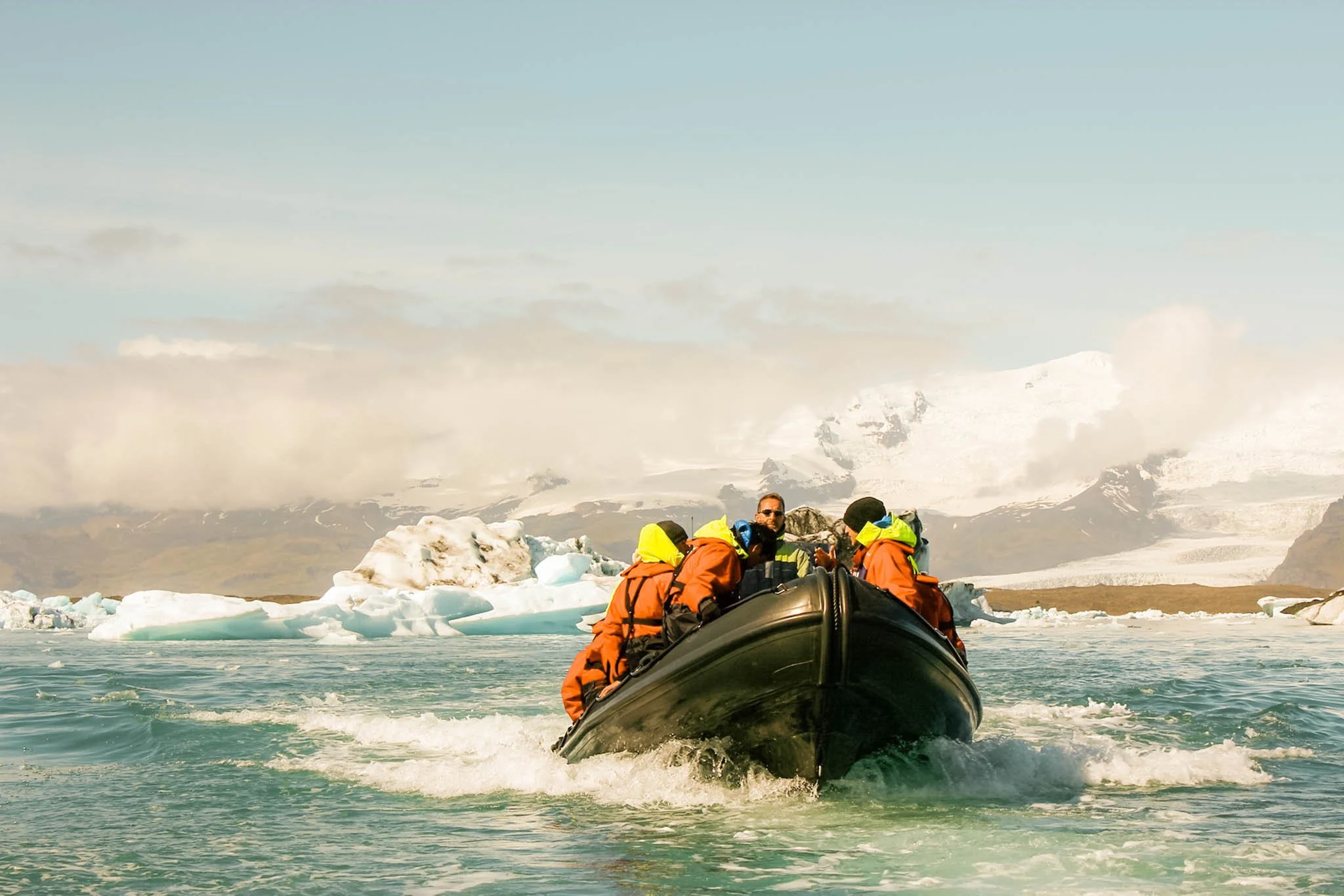
The group explores Skaftafell National Park, hiking beside glaciers, volcanic cliffs, and basalt waterfalls. Later, they travel east for a boat tour through Jökulsárlón Glacier Lagoon, where icebergs drift through the water and seals may be seen nearby.
This is the Iceland many students picture before they go: ice, dark rock, cold water, and open space.
But it is not just scenery. The day gives students a chance to see how glaciers shape the land, how much of Iceland’s geography is built from ice and volcanic activity, and why the landscape changes over time.
3. The itinerary goes beyond the south coast
The trip starts and ends near Reykjavik, but it does not stay in one region.
Day 3 is a Reykjavik folklore tour with a local guide, including Hallgrimskirkja Cathedral, the Sun Voyager sculpture, the harbor, and the city center.
Day 4 is the Golden Circle: Þingvellir National Park, Geysir, and Gullfoss, before the group heads south to Vik.
After Skaftafell and Jökulsárlón, the group continues north.
Day 8 is a road trip toward Husavik, with waterfalls and other stops along the way. Day 9 is whale watching out of Husavik, a visit to the Whale Museum, historic churches, and time looking for puffins along the coast.
Day 10 includes the Herring Era Museum and the traditional turf houses at Glaumbær.
Day 11 is Snæfellsjökull National Park, with Lóndrangar cliffs and volcanic coastal views.
Day 12 is the Grabrok Crater hike before returning to Reykjavik.
Day 13 closes with Friðheimar Farm, where students learn how geothermal energy is used to grow tomatoes, time in Selfoss with Icelandic horses, and a soak at the Blue Lagoon.
That movement matters. Students see Iceland through cities, coastlines, waterfalls, farms, glaciers, volcanic craters, museums, and campgrounds, not from one single viewpoint.
What families should know before applying
Trip length and grade range. This is a 14-day trip for students completing grades 8 to 11.
Location. The trip travels through southern Iceland and beyond, including Reykjavik, Vik, Skaftafell, Jökulsárlón Glacier Lagoon, Husavik, Snæfellsjökull National Park, and the Blue Lagoon.
Travel. Families book flights to and from Keflavik, Iceland. We use KEF as the gateway airport. Do not book flights until RLT sends the official travel windows.
Escorted flight option. An optional group flight with an RLT leader is available from the New York area.
Accommodations. Students tent camp throughout the trip in established campgrounds. Tents are shared by 2 to 3 students, divided by gender.
Bathrooms and showers. Campsites are simple, with rustic bathrooms at each campsite. Short showers are typically available every 2 to 3 days.
Food. Most meals are cooked as a group at the campsite, with a few local meals along the way. Students rotate through cook crew, helping plan, prep, cook, and clean with leader support. Expect meals like pasta, soups, rice bowls, pancakes, and sandwiches.
Dietary needs. RLT accommodates allergies and dietary needs, including vegetarian, gluten-free, dairy-free, and other needs.
Packing. RLT recommends one checked soft duffel bag, not a rolling suitcase, plus a small carry-on backpack. Students bring personal clothing, toiletries, and individual camping gear such as a sleeping bag and sleeping pad. RLT provides group gear, including tents, cooking equipment, and specialized activity equipment.
Passport. A valid passport is required and must be valid for at least 6 months beyond the end of the trip.
Trip insurance. Trip insurance is required for international travel.
Vaccinations. Expect that no specific shots are required beyond routine immunizations based on current CDC guidelines, and families should check that students are up to date on routine vaccinations, including a tetanus booster within the past 10 years. RLT recommends families check with a pediatrician before international travel.
Phones. This program is phone-free. Leaders collect phones and personal electronics on Day 1 and return them at the end. Digital cameras and GoPros are welcome as long as they do not connect to the internet.
Questions families often ask
Is the Iceland trip camping the whole time?
Yes. Students tent camp throughout the trip in established campgrounds.
Does my student need previous camping experience?
Previous camping experience is not listed as required. Students should be ready to sleep in tents, help set up camp, cook meals, keep shared spaces clean, and manage changing weather.
What kind of service do students do?
The trip includes environmental service work with a local partner near Vik. The exact projects can shift based on partner needs, but the work is connected to Iceland’s fragile ecosystems and climate.
Will students see whales or puffins?
The itinerary includes whale watching out of Husavik and time looking for puffins along the coast. Wildlife sightings depend on timing, conditions, and location.
How active is this trip?
Students should be ready for daily movement, hiking, service work, camping routines, and travel days. The itinerary includes coastal hikes, crater hikes, national park trails, and active days outside.
How to talk to your teen about this trip
Before they go, you might say:
“You’ll spend two weeks tent camping in Iceland. You’ll explore Reykjavik, the Golden Circle, black sand beaches, waterfalls, glaciers, a glacier lagoon, whale watching, turf houses, volcanic craters, Icelandic horses, and the Blue Lagoon. You’ll also do environmental service near Vik and help with camp responsibilities every day.”
After they come home, ask:
“What did your group do during the service days near Vik?”
“What was Reynisfjara like?”
“What did you see at Jökulsárlón Glacier Lagoon?”
“What was it like camping in Iceland?”
“What surprised you about the landscape?”
Explore the Iceland trip
For dates, tuition, itinerary, accommodations, packing details, paperwork, and the technology policy, see the full Iceland itinerary.