
3 Things Most Families Don't Know About Our Greece Trip
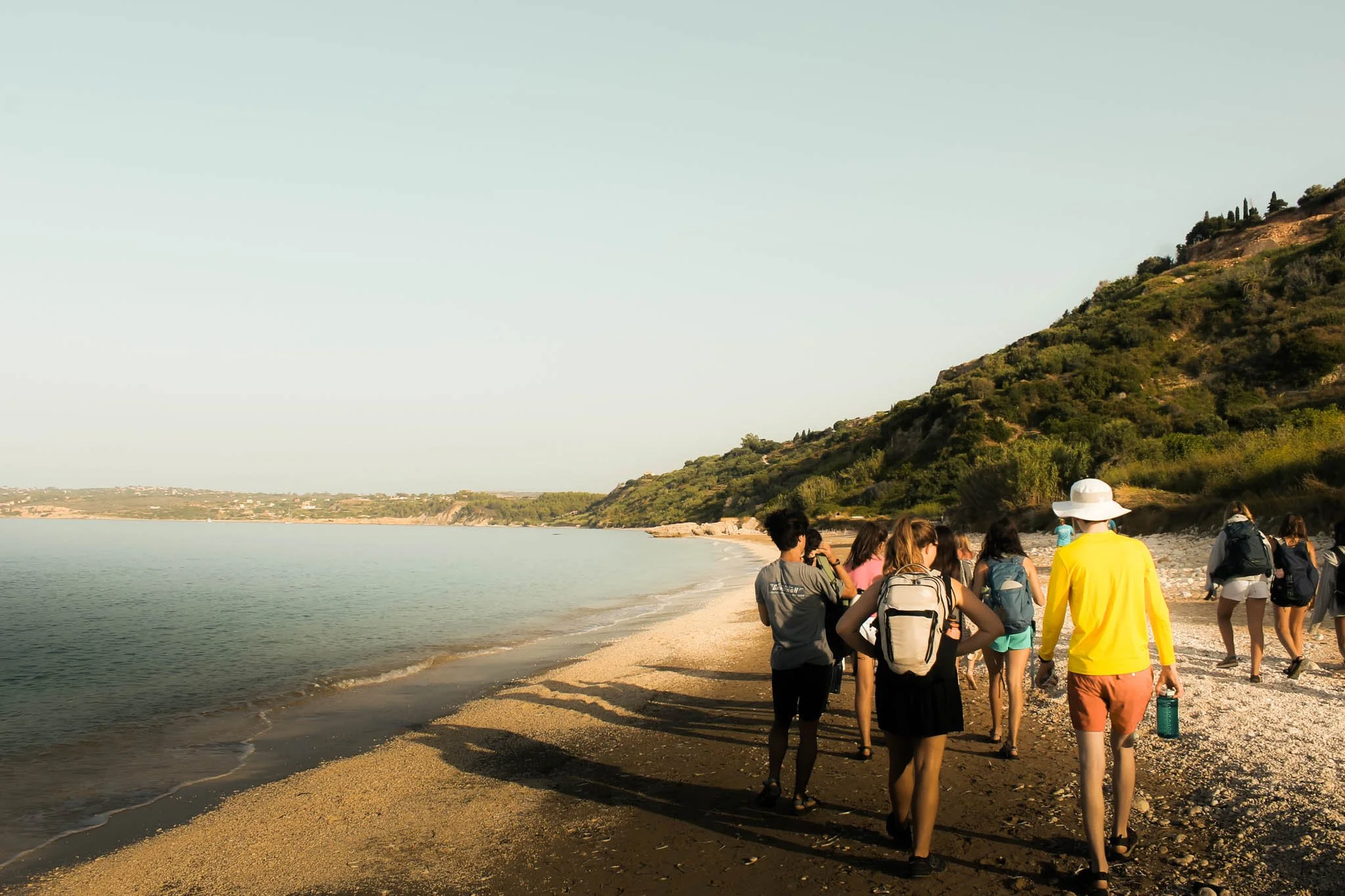
TL;DR
Most parents imagine Greece as islands and ancient history. RLT's Greece trip is anchored in hands-on sea-turtle research—morning beach surveys tracking fresh nest sites, afternoon snorkeling in seagrass meadows documenting feeding turtles, camping on uninhabited islands, and learning marine conservation from scientists actually doing the work. The group spends multiple days on boats and beaches, uses simple accommodations (tent camping), and works alongside local turtle-research teams. You'll see the Acropolis, swim in limestone caves, and experience Kefalonia's culture—but the structure is always the research, not the tourism.
How parents should read this post
"Island trip" can mean resort lounging or real immersion. Here's what real marine-science immersion looks like, and how the work shapes daily rhythm and lasting understanding.
1. Teens track sea-turtle nesting sites every morning and document feeding behavior in the afternoon—real citizen-science data
Direct answer: Your teen will conduct daily beach surveys identifying fresh turtle nests, measure nest dimensions, photograph nest sites, and then snorkel in nearby seagrass to observe and document sea turtles actually feeding—collecting real behavioral and population data.
Most family trips to Greece treat sea turtles as a tourist photo opportunity ("Look, a sea turtle!"). RLT's Greece program treats turtle research as the core work. The Ionian Sea, where the group operates, hosts significant populations of loggerhead and green sea turtles that nest seasonally and feed year-round in the region's seagrass beds and shallow waters.
Every morning on the trip, the group splits into survey teams, walks designated beaches, documents fresh nests (identifying the species by nest morphology and track patterns), measures nest dimensions, and records the data. By afternoon, the same teens snorkel in nearby seagrass meadows (Posidonia oceanica), observing how turtles feed, identifying behavior patterns, and counting feeding events. This observation feeds into Greece's national turtle-tracking program, managed by scientific organizations like the Sea Turtle Protection Society of Greece.
Citizen-science programs that involve teens in real data collection show measurable outcomes compared to classroom-only instruction. Research in environmental education demonstrates that teens who participate in structured wildlife monitoring develop deeper understanding of scientific methodology and greater commitment to conservation work. The critical distinction: the data they collect must actually be used by real scientists for real research questions—not created as an educational exercise.
ARCHELON, the Sea Turtle Protection Society of Greece, has been conducting systematic sea-turtle research since 1983, maintaining some of the world's longest-running nesting population datasets. When RLT teens participate in beach surveys contributing to this work, they're not doing simulation; they're part of actual research infrastructure that informs conservation policy.
This isn't feel-good voluntourism. It's work that matters.
2. Camping happens on uninhabited islands in the Ionian—not hotels or resort-style accommodations
Direct answer: Your teen will sleep in tents on small, uninhabited islands for multiple nights, where the group is the only people present and the experience is truly remote—no hotels, no infrastructure, just the sea and the coast.
Many family trips to Greek islands offer "camping" that's really glamping at resort properties. RLT's Greece trip takes groups to actual uninhabited islands in the Ionian—small, protected marine zones with no development, no resorts, no tourists other than the group itself. Teens pitch tents on sandy beaches or flat rocky ground, cook communal meals, and sleep to the sound of the Ionian Sea.
This isn't comfortable. It's intentionally simple. And that simplicity is the whole point: it forces connection. Without WiFi, without distractions, without the infrastructure of tourist Greece, your teen's focus narrows to the actual work, the actual people in the group, and the actual landscape. Research on outdoor education consistently shows that teens in remote-camping settings develop stronger group cohesion and deeper environmental connection than cohorts in hotel-based programs. The mechanisms are clear: without electricity and entertainment, the group becomes the focus; without infrastructure, direct engagement with the landscape is unavoidable. These aren't incidental benefits—they're structural outcomes of the experience design.
The Ionian islands hosting these trips—particularly the areas near Kefalonia—are protected under EU marine conservation directives due to sea-turtle nesting habitat and Posidonia meadow preservation. That protection means limited development, limited human impact, and the chance for your teen to experience what a genuinely wild Mediterranean island feels like.
3. The group snorkels through seagrass meadows, not coral reefs—and learns why seagrass is more important than reefs for regional food webs
Direct answer: Your teen will snorkel in Posidonia oceanica seagrass beds, learning to identify the plants and understand how Mediterranean seagrass meadows are the foundation of the food system that sea turtles and fish depend on.
Mediterranean snorkeling is marketed as tropical-reef-style experience: clear water, colorful fish, beautiful. The reality of Mediterranean snorkeling is different and, ecologically, more significant. Posidonia oceanica is a flowering seagrass found throughout the Mediterranean. It forms meadows that look like underwater fields of tall grass—not photogenic, not "dramatic," but ecologically foundational. These beds are nurseries for juvenile fish, feeding grounds for sea turtles and seabirds, and carbon sinks that store more carbon per square meter than terrestrial forests (UNESCO research). Additionally, seagrass meadows break wave energy, protecting shorelines from erosion.
When RLT teens snorkel in Posidonia beds, they're learning to identify seagrass health by blade coloration and density, to count fish species sheltering in the beds, and to see how sea turtles navigate and forage in this environment. That skill—learning to value what's ecologically important over what's photogenic—is a major mental shift that persists long after the trip ends.
Mediterranean seagrass meadows are disappearing at 0.5–2% per year due to coastal development, anchoring, pollution, and bottom-trawling. In some regions near Greece, loss rates reach 5% annually (Source: Mediterranean Seagrass Watch, Regional Assessment 2024). Understanding why these meadows matter—not as scenic backdrops, but as food-web foundational species—is urgent and personal when you're snorkeling in them.
Seagrass meadows like Posidonia oceanica are foundational to Mediterranean food webs and carbon cycling. They are disappearing rapidly due to coastal development, anchoring damage, and pollution. Teaching teens to recognize seagrass value—learning to see what's ecologically foundational rather than what's photogenic—is the beginning of systems-level ecological thinking. When teens recognize that an underwater field of grass matters more than a coral formation for fish survival and carbon storage, they've shifted from aesthetic to ecological reasoning.
How to talk to your teen about this trip
Before they go: "You'll be doing actual marine-science fieldwork. The camping is simple—that's intentional. It keeps you focused on the work, not on comfort."
After they return: "What surprised you most about how you tracked the turtles? Did camping on an island change how you think about comfort?"
FAQ
Q: What exactly happens during daily beach surveys? A: Groups walk designated beaches at dawn, looking for fresh sea-turtle nest sites. When a nest is found, the team measures nest dimensions, photographs nest and track patterns, records location coordinates, and documents any environmental hazards. Data is submitted to Greece's national turtle-monitoring program.
Q: Is it safe to snorkel in areas with sea turtles? A: Yes. Snorkeling protocols require buddy systems, depth limits, and clear communication. Leaders are ACA-certified waterfront specialists with 80+ hours Wilderness First Responder training. Snorkeling areas are carefully selected for water safety and minimal encounter risk.
Q: How long will we camp on islands? A: Multiple nights during the trip; exact duration depends on weather and group rhythm. The full trip is approximately 14 days (June 16–July 1, 2026). Island camping forms the core of the experience.
Q: What kind of food do we eat while camping on islands? A: Mediterranean diet—fresh vegetables, local fish and seafood, bread, olive oil, local cheese. Meals are cooked in group-style setups. Vegetarian options available. Food is practical rather than elaborate, consistent with the simple-camping approach.
Q: What will my teen do if they're not comfortable camping? A: Tent camping on islands is core to the trip. If your teen is not comfortable with basic camping (sleeping in a tent, limited shower access, no electricity), this trip may not be the best fit. Talk to RLT directors before enrolling.
Q: Is there any time to visit the Acropolis or other historical sites? A: Yes. The trip includes cultural-immersion time exploring Kefalonia, visiting archaeological sites, and learning from local historians. However, the balance favors marine research and island immersion over tourism checklist activities.
Q: What if my teen is afraid of the ocean or doesn't swim well? A: Talk to RLT staff before enrolling. Snorkeling and boat-based days are core components. While swimming ability can be built with gradual exposure, if your teen has significant water anxiety, this particular trip may not be appropriate.
Q: What's the leadership structure for this trip? A: Small groups with multiple trained leaders. All leaders hold WFR certification, ACA waterfront certifications (as appropriate), and complete RLT's 10-day pre-season training. The working leader-to-teen ratio is well below ACA's recommended 1:8.
Talk with us
Want to understand the daily rhythm of beach surveys and snorkeling work, or want to discuss whether this trip is right for your teen's comfort level with water and camping? Schedule a call with an RLT director to walk through specifics.
[DO NOT PUBLISH — QUOTE VERIFICATION NEEDED. See /content/drafts/QUOTE-VERIFICATION-NEEDED.md before publishing.]
TL;DR
Most parents imagine Greece as islands and ancient history. RLT's Greece trip is anchored in hands-on sea-turtle research—morning beach surveys tracking fresh nest sites, afternoon snorkeling in seagrass meadows documenting feeding turtles, camping on uninhabited islands, and learning marine conservation from scientists actually doing the work. The group spends multiple days on boats and beaches, uses simple accommodations (tent camping), and works alongside local turtle-research teams. You'll see the Acropolis, swim in limestone caves, and experience Kefalonia's culture—but the structure is always the research, not the tourism.
How parents should read this post
"Island trip" can mean resort lounging or real immersion. Here's what real marine-science immersion looks like, and how the work shapes daily rhythm and lasting understanding.
1. Teens track sea-turtle nesting sites every morning and document feeding behavior in the afternoon—real citizen-science data
Direct answer: Your teen will conduct daily beach surveys identifying fresh turtle nests, measure nest dimensions, photograph nest sites, and then snorkel in nearby seagrass to observe and document sea turtles actually feeding—collecting real behavioral and population data.
Most family trips to Greece treat sea turtles as a tourist photo opportunity ("Look, a sea turtle!"). RLT's Greece program treats turtle research as the core work. The Ionian Sea, where the group operates, hosts significant populations of loggerhead and green sea turtles that nest seasonally and feed year-round in the region's seagrass beds and shallow waters.
Every morning on the trip, the group splits into survey teams, walks designated beaches, documents fresh nests (identifying the species by nest morphology and track patterns), measures nest dimensions, and records the data. By afternoon, the same teens snorkel in nearby seagrass meadows (Posidonia oceanica), observing how turtles feed, identifying behavior patterns, and counting feeding events. This observation feeds into Greece's national turtle-tracking program, managed by scientific organizations like the Sea Turtle Protection Society of Greece.
Citizen-science programs that involve teens in real data collection show measurable outcomes compared to classroom-only instruction. Research in environmental education demonstrates that teens who participate in structured wildlife monitoring develop deeper understanding of scientific methodology and greater commitment to conservation work. The critical distinction: the data they collect must actually be used by real scientists for real research questions—not created as an educational exercise.
ARCHELON, the Sea Turtle Protection Society of Greece, has been conducting systematic sea-turtle research since 1983, maintaining some of the world's longest-running nesting population datasets. When RLT teens participate in beach surveys contributing to this work, they're not doing simulation; they're part of actual research infrastructure that informs conservation policy.
This isn't feel-good voluntourism. It's work that matters.
2. Camping happens on uninhabited islands in the Ionian—not hotels or resort-style accommodations
Direct answer: Your teen will sleep in tents on small, uninhabited islands for multiple nights, where the group is the only people present and the experience is truly remote—no hotels, no infrastructure, just the sea and the coast.
Many family trips to Greek islands offer "camping" that's really glamping at resort properties. RLT's Greece trip takes groups to actual uninhabited islands in the Ionian—small, protected marine zones with no development, no resorts, no tourists other than the group itself. Teens pitch tents on sandy beaches or flat rocky ground, cook communal meals, and sleep to the sound of the Ionian Sea.
This isn't comfortable. It's intentionally simple. And that simplicity is the whole point: it forces connection. Without WiFi, without distractions, without the infrastructure of tourist Greece, your teen's focus narrows to the actual work, the actual people in the group, and the actual landscape. Research on outdoor education consistently shows that teens in remote-camping settings develop stronger group cohesion and deeper environmental connection than cohorts in hotel-based programs. The mechanisms are clear: without electricity and entertainment, the group becomes the focus; without in-frastructure, direct engagement with the landscape is unavoidable. These aren't incidental benefits—they're structural outcomes of the experience design.
The Ionian islands hosting these trips—particularly the areas near Kefalonia—are protected under EU marine conservation directives due to sea-turtle nesting habitat and Posidonia meadow preservation. That protection means limited development, limited human impact, and the chance for your teen to experience what a genuinely wild Mediterranean island feels like.
3. The group snorkels through seagrass meadows, not coral reefs—and learns why seagrass is more important than reefs for regional food webs
Direct answer: Your teen will snorkel in Posidonia oceanica seagrass beds, learning to identify the plants and understand how Mediterranean seagrass meadows are the foundation of the food system that sea turtles and fish depend on.
Mediterranean snorkeling is marketed as tropical-reef-style experience: clear water, colorful fish, beautiful. The reality of Mediterranean snorkeling is different and, ecologically, more significant. Posidonia oceanica is a flowering seagrass found throughout the Mediterranean. It forms meadows that look like underwater fields of tall grass—not photogenic, not "dramatic," but ecologically foundational. These beds are nurseries for juvenile fish, feeding grounds for sea turtles and seabirds, and carbon sinks that store more carbon per square meter than terrestrial forests (UNESCO research). Additionally, seagrass meadows break wave energy, protecting shorelines from erosion.
When RLT teens snorkel in Posidonia beds, they're learning to identify seag#r#a sTsL ;hDeRa l th Mboys tb lpaadree nctosl oirmaatgiionne aGnrde edceen saist yi,s ltaon dcso uanntd fainschi esnpte chiiesst osrhye.l tReLrTi'nsg Girne etchee tbreidps ,i sa nadn cthoo rseede ihno wh asnedas -tounr tsleeas- tnuarvtilgea tree saenadr cfho—mroargnei nign btehaicsh esnuvrivreoynsm etnrta.c kTihnagt fsrkeislhl —lneeasrtn isnigt etso, vaafltueer nwohoant 'ssn oerckoelloignigc ailnl ys eiamgproarstsa nmte aodvoewrs wdhoactu'mse npthiontgo gfeeneidci—nigs tau rmtaljeosr, mceanmtpailn gs hoinf tu ntihnahta bpietresdi sitssl alnodnsg, aafntde rl etahren itnrgi pm aernidnse. c oMnesdeirtveartriaonne afnr osme asgcriaesnst imsetasd oawcst uaarlel yd idsoaipnpge atrhien gw oartk .0*.*5 –2T%h ep egrr oyuepa rs pdeuned st om uclotaisptlael ddaeyvse loonp mbeonatt,s aanncdh obreiancgh,e sp,o lulsuetsi osni,m palned abcoctotmommo-dtartaiwolnisn g(.t eInnt scoammep irnegg)i,o nasn dn ewaorr kGsr eaelcoen,g sliodses lroactaels trueratclhe -5r%e saenanrucahl ltye a(mSso.u rYcoeu:' l[lM esdeiet etrhrea nAecarno pSoelaigsr,a sssw iWma ticnh ,l iRmeegsitoonnael cAasvseess,s maenndt e2x0p2e4r]i(ehntctep sK:e/f/awlwown.isae'asg rcauslstwuartec—bhu.to rtgh/e) )s.t rUuncdteurrset ainsd ianlgw awyhsy tthhee sree smeeaardcohw,s nmoatt ttehre—n otto uarsi ssmc.e n i-c- -b a c#k#d rHoopws ,p abruetn tass sfhoooudl-dw erbe afdo utnhdiast ipoonsatl
s"pIescliaensd— itsr iupr"g ecnatn amneda np erressoonratl lwohuenng iynogu 'orre rsenaolr kiemlmienrgs iionn .t hHeemr.e ' sS ewahgarta srse amle amdaorwisn el-iskcei ePnocsei diomnmiear soicoena nliocoak sa rlei kfeo,u nadnadt ihoonwa lt hteo wMoerdki tsehrarpaense adna ifloyo dr hwyetbhsm aanndd claarsbtoinn gc yucnldienrgs.t aTnhdeiyn ga.r e -d-i-s a p#p#e a1r.i nTge ernasp itdrlayc kd usee at-ot ucrotalset anle sdteivnegl ospimteenst ,e vaenrcyh omroirnngi ndga maangde ,d oacnudm epnotl lfueteidoinn.g Tbeeahcahviinogr tiene ntsh et oa frteecrongonoinz—er esaela gcriatsisz evna-lsucei—elnecaer ndiantga t o* sDeier ewchta ta'nss weecro:lo*g iYcoaulrl yt efeonu nwdialtli ocnoanld urcatt hdeari ltyh abne awchha ts'usr vpehyost oigdeennitci—ifsy itnhge fbreegsihn ntiunrgt loef nseyssttse,m sm-elaesvuerle enceoslto gdiicmaeln stihoinnsk,i npgh.o tWohgerna pthe enness tr esciotgensi,z ea ntdh atth eann sunnodrekrewla tienr nfeiaerlbdy osfe aggrraassss mtaot toebrsse rmvoer ea ntdh adno cau mceonrta ls efao rtmuarttiloens faocrt ufailslhy sfuerevdiivnagl—c oalnlde cctairnbgo nr esatlo rbaeghea,v itohreayl' vaen ds hpiofptuelda tfiroonm daaetsat.h e tMiocs tt of aemciollyo gtirciapls rteoa sGorneiencge. t r-e-a-t
s#e#a Htouwr ttloe st aalsk at ot oyuoruirs tt epehno taob oouptp otrhtiusn ittryi p( " LBoeofko,r ea tsheeay tguor:t l"eY!o"u)'.l lR LbTe' sd oGirnege caec tpuraolg rmaamr itnree-astcsi etnucret lfei erledsweoarrkc.h Tahse tchaem pcionrge iwso rski.m pTlhee— tIhoanti'asn iSnetae,n twihoenrael .t hIet gkreoeupps oypoeur aftoecsu,s ehdo sotns tshieg nwiofrikc,a nnto tp oopnu lcaotmifoonrst .o"f
lAofgtgeerr htehaedy  arnedt ugrrne:e n" Wsheaat  tsuurrtplreiss etdh ayto un emsots ts eaabsoounta lhloyw  aynodu  ftereadc kyeeda rt-hreo utnudr tilne st?h eD irde gciaomnp'isn gs eoang raans si sbleadnsd  acnhda nsghea lhlooww  ywoaut etrhsi.n
k
 Eavbeoruyt  mcoormnfionrgt ?o"n

  t-h-e-
  t
  r#i#p ,F AtQh
  e
   *g*rQo:u pW hsaptl ietxsa citnltyo  hsauprpveenys  tdeuarmisn,g  wdaaliklsy  dbeesaicghn astuerdv ebyesa?c*h*e
   sA,:  dGorcouumpesn twsa lfkr edsehs ingensattse d( ibdeeancthiefsy iantg  dtahwen ,s pleocoikeisn gb yf onre sftr emsohr psheoal-otguyr talned  ntersatc ks iptaetst.e rWnhse)n,  am enaessutr eiss  nfeosutn dd,i mtehnes itoenasm,  maenads urreecso rndess tt hdei mdeantsai.o nBsy,  apfhtoetrongoroanp,h st hnee ssta maen dt eternasc ks npoartkteelr nisn,  nreeacrobryd ss elaogcraatsiso nm ecaodoorwdsi n(aPtoessi,d oannida  doocceuamneinctas) ,a noyb seenrvviirnogn mheonwt atlu rhtalzeasr dfse.e dD,a tiad einst isfuybimnigt tbeedh atvoi oGrr epeactet'esr nnsa,t iaonnda lc otuunrttilneg- mfoeneidtionrgi negv epnrtosg.r aTmh.i
   s
    *o*bQs:e rIvsa tiito ns affeee dtso  isnntoor kGerle eicne 'asr enaast iwointahl  steuar ttluer-ttlreasc?k*i*n
    gA :p rYoegsr.a mS,n omraknealgiendg  bpyr ostcoiceonltsi friecq uoirrgea nbiuzdadtyi osnyss tleimkse,  tdheep tShe al iTmuirttsl,e  aPnrdo tcelcetairo nc oSmomcuineitcya toifo nG.r eLeecaed.e
    r
    sC iatriez eAnC-As-ccieerntcief iperdo gwraatmesr ftrhoantt  isnpveoclivael itsetesn sw iitnh  r8e0a+l  hdoautras  cWoillldeecrtnieosns  sFhiorws tm eRaessuproanbdleer  oturtacionmiensg .c oSmnpoarrkeedl itnog  calraesassr oaorme- ocnalrye fiunlsltyr uscetlieocnt.e dR efsoera rwcaht eirn  seanfveitryo namnedn tmailn iemdaulc aetnicoonu ndteemro nrsitsrka.t
    e
    s* *tQh:a tH otwe elnosn gw hwoi lpla rwtei cciapmapt eo ni ni ssltarnudcst?u*r*e
    dA :w iMludlltiifpel em onniigthotrsi ndgu rdienvge ltohpe  dtereippe;r  euxnadcetr sdtuarnadtiinogn  odfe psecnidesn toinf iwce amtehtehro daonldo ggyr oaunpd  rghryetahtme.r  Tchoem mfiutlmle nttr itpo  icso naspeprrvoaxtiimoant ewloyr k1.4  Tdhaey sc r(iJtuincea l1 6d–Jiusltyi n1c,t i2o0n2:6 )t.h eI sdlaatnad  tchaemyp icnogl lfeocrtm sm utshte  accotruea lolfy  tbhee  uesxepde rbiye nrceea.l

     s*c*iQe:n tWihsatts  kfionrd  roefa lf oroeds edaor cwhe  qeuaets twihoinlse—n octa mcprienagt eodn  aiss laann desd?u*c*a
     tAi:o nMaeld ietxeerrrcainseea.n

      dAiReCtH—fErLeOsNh,  vtehgee tSaebal eTsu,r tlloec aPlr oftiescht iaonnd  Ssoecaifeotoyd ,o fb rGeraede,c eo,l ihvaes  obiele,n  lcoocnadlu ccthienegs es.y sMteeamlast iacr es ecao-otkuerdt lien  rgersoeuapr-csht yslien csee t1u9p8s3.,  Vmeagienttaariinainn go pstoimoen so fa vtahiel awbolrel.d 'Fso oldo nigse sptr-arcutnincianlg  rnaetshteirn gt hpaonp uellaatbioorna tdea,t acsoentssi.s tWehnetn  wRiLtTh  tteheen ss ipmaprltei-cciapmaptien gi na pbperaocahc hs.u
      r
      v*e*yQs:  cWohnattr iwbiultli nmgy  ttoe etnh idso  wiofr kt,h etyh'erye' rneo tn octo mdfooirntga bsliem uclaamtpiionng;? *t*h
      eAy:' rTee npta rcta mopfi nagc touna li srleasnedasr cihs  icnofrrea sttor utchteu rter itph.a tI fi nyfoourrm st eceonn siesr vnaotti ocno mpfoolritcayb.l
      e
       Twhiitsh  ibsans'itc  fceaemlp-ignogo d( svloeleupnitnogu riins ma.  tIetn'ts,  wloirmki ttehda ts hmoawtetre rasc.c
       e
       s-s-,-
       n
       o# #e l2e.c tCraimcpiitnyg) ,h atphpiesn st roinp  umnaiyn hnaobti tbeed  tihsel abnedsst  ifni tt.h eT aIlokn itaon —nRoLtT  hdoitreelcst oorrs  rbeesfoorrte- setnyrloel laicncgo.m
       m
       o*d*aQt:i oInss
       t
       h*e*rDei raencyt  tainmsew etro: *v*i sYiotu rt htee eAnc rwoiploll issl eoerp  oitnh etre nhtiss toonr iscmaall ls,i tuensi?n*h*a
       bAi:t eYde si.s lTahned st rfiopr  imnuclltuidpelse  cnuilgthutrsa,l -wihmemreer stihoen  gtriomuep  eixsp ltohrei nogn lKye fpaeloopnliea ,p rveisseintti nagn da rtchhea eeoxlpoegriiceanlc es iitse st,r ualnyd  rleemaortnei—nngo  fhrootme llso,c anlo  hiinsftroarsitarnusc.t uHroew,e vjeurs,t  tthhee  bsaelaa nacned  ftahveo rcso amsatr.i
       n
       eM arneys efaarmcihl ya ntdr iipssl atnod  Girmemeekr siisolna nodvse ro ftfoeurr i"scma mcphiencgk"l itshta ta'cst irveiatlileys .g
       l
       a*m*pQi:n gW haatt  riefs omryt  tpereonp eirst iaefsr.a iRdL To'fs  tGhree eoccee atnr iopr  tdaokeessn 'gtr osuwpism  twoe lalc?t*u*a
       lA :u nTianlhka btiot eRdL Ti ssltaanfdfs  bienf otrhee  eInornoilalni—snmga.l lS,n oprrkoetleicntge da nmda rbionaet -zboanseesd  wdiatyhs  naor ed ecvoerleo pcmoemnpto,n ennot sr.e sWohritlse,  snwoi mtmoiunrgi satbsi loitthye rc atnh abne  tbhuei lgtr owuipt hi tgsrealdfu.a lT eeexnpso spuirtec,h  itfe nytosu ro nt eseann dhya sb esaicghneisf iocra nftl awta treorc kayn xgireotuyn,d ,t hcioso kp acrotmimcuunlaalr  mterailps ,m aayn dn ostl ebeep  atpop rtohper isaotuen.d

        o*f* Qt:h eW hIaotn'isa nt hSee al.e
        a
        dTehrissh iips ns'ttr uccotmufroer tfaobrl et.h iIst 'tsr iipn?t*e*n
        tAi:o nSamlallyl  sgirmopulpes.  wAintdh  tmhualtt ispilmep ltircaiitnye di sl etahdee rwsh.o lAel lp olienatd:e rist  hfoolrdc eWsF Rc ocnenretcitfiiocna.t iWoint,h oAuCtA  WwiaFtie,r fwriotnhto ucte rdtiisftircaacttiioonnss ,( awsi tahpopurto ptrhiea tien)f,r aasntdr uccotmuprlee toef  RtLoTu'rsi s1t0 -Gdraeye cper,e -ysoeuars otne etnr'asi nfioncgu.s  Tnhaer rwoowrsk itnog  tlheea daecrt-utaol- tweoernk ,r atthieo  aicst uwaell lp eboeplloew  iAnC At'hse  rgercooumpm,e nadnedd  t1h:e8 .a
        c
        t-u-a-l

         l#a#n dTsaclakp ew.i tRhe suesa
         r
         cWha notn  toou tudnodoerr setdauncda ttihoen  dcaoinlsyi srtheyntthlmy  osfh obwesa cthh astu rtveeeynss  ainnd  rsenmoortkee-lcianmgp iwnogr ks,e totri nwgasn td etvoe ldoips csutsrso nwgheert hgerro utph icso htersiipo ni sa nrdi gdhete pfeorr  eynovuirr otnemeenn'tsa lc ocmofnonretc tlieovne lt hwaint hc owhaotretrs  ainnd  hcoatmepli-nbga?s e*d* [pSrcohgerdaumlse.  aT hcea lmle cwhiatnhi samns  RaLrTe  dcilreeacrt:o rw]i(thhtotupts :e/l/ewcwtwr.itchietryo aadnlde sesnttrearvtealiendm.ecnotm,/ gtehtem ogrreoiunpf ob)e*c*o mteos  wtahlek  ftohcruosu;g hw istpheocuitf iicnsf.rastructure, direct engagement with the landscape is unavoidable. These aren't incidental benefits—they're structural outcomes of the experience design.

         The Ionian islands hosting these trips—particularly the areas near Kefalonia—are protected under EU marine conservation directives due to sea-turtle nesting habitat and Posidonia meadow preservation. That protection means limited development, limited human impact, and the chance for your teen to experience what a genuinely wild Mediterranean island feels like.

         ---

         ## 3. The group snorkels through seagrass meadows, not coral reefs—and learns why seagrass is more important than reefs for regional food webs

         **Direct answer:** Your teen will snorkel in Posidonia oceanica seagrass beds, learning to identify the plants and understand how Mediterranean seagrass meadows are the foundation of the food system that sea turtles and fish depend on.

         Mediterranean snorkeling is marketed as tropical-reef-style experience: clear water, colorful fish, beautiful. The reality of Mediterranean snorkeling is different and, ecologically, more significant. Posidonia oceanica is a flowering seagrass found throughout the Mediterranean. It forms meadows that look like underwater fields of tall grass—not photogenic, not "dramatic," but ecologically foundational. These beds are nurseries for juvenile fish, feeding grounds for sea turtles and seabirds, and carbon sinks that store more carbon per square meter than terrestrial forests (UNESCO research). Additionally, seagrass meadows break wave energy, protecting shorelines from erosion.

         When RLT teens snorkel in Posidonia beds, they're learning to identify seagrass health by blade coloration and density, to count fish species sheltering in the beds, and to see how sea turtles navigate and forage in this environment. That skill—learning to value what's ecologically important over what's photogenic—is a major mental shift that persists long after the trip ends.

         Mediterranean seagrass meadows are disappearing at 0.5–2% per year due to coastal development, anchoring, pollution, and bottom-trawling. In some regions near Greece, loss rates reach 5% annually (Source: [Mediterranean Seagrass Watch, Regional Assessment 2024](https://www.seagrasswatch.org/)). Understanding why these meadows matter—not as scenic backdrops, but as food-web foundational species—is urgent and personal when you're snorkeling in them.

         Seagrass meadows like Posidonia oceanica are foundational to Mediterranean food webs and carbon cycling. They are disappearing rapidly due to coastal development, anchoring damage, and pollution. Teaching teens to recognize seagrass value—learning to see what's ecologically foundational rather than what's photogenic—is the beginning of systems-level ecological thinking. When teens recognize that an underwater field of grass matters more than a coral formation for fish survival and carbon storage, they've shifted from aesthetic to ecological reasoning.

         ---

         ## How to talk to your teen about this trip

         Before they go: "You'll be doing actual marine-science fieldwork. The camping is simple—that's intentional. It keeps you focused on the work, not on comfort."

         After they return: "What surprised you most about how you tracked the turtles? Did camping on an island change how you think about comfort?"

         ---

         ## FAQ

         **Q: What exactly happens during daily beach surveys?**
         A: Groups walk designated beaches at dawn, looking for fresh sea-turtle nest sites. When a nest is found, the team measures nest dimensions, photographs nest and track patterns, records location coordinates, and documents any environmental hazards. Data is submitted to Greece's national turtle-monitoring program.

         **Q: Is it safe to snorkel in areas with sea turtles?**
         A: Yes. Snorkeling protocols require buddy systems, depth limits, and clear communication. Leaders are ACA-certified waterfront specialists with 80+ hours Wilderness First Responder training. Snorkeling areas are carefully selected for water safety and minimal encounter risk.

         **Q: How long will we camp on islands?**
         A: Multiple nights during the trip; exact duration depends on weather and group rhythm. The full trip is approximately 14 days (June 16–July 1, 2026). Island camping forms the core of the experience.

         **Q: What kind of food do we eat while camping on islands?**
         A: Mediterranean diet—fresh vegetables, local fish and seafood, bread, olive oil, local cheese. Meals are cooked in group-style setups. Vegetarian options available. Food is practical rather than elaborate, consistent with the simple-camping approach.

         **Q: What will my teen do if they're not comfortable camping?**
         A: Tent camping on islands is core to the trip. If your teen is not comfortable with basic camping (sleeping in a tent, limited shower access, no electricity), this trip may not be the best fit. Talk to RLT directors before enrolling.

         **Q: Is there any time to visit the Acropolis or other historical sites?**
         A: Yes. The trip includes cultural-immersion time exploring Kefalonia, visiting archaeological sites, and learning from local historians. However, the balance favors marine research and island immersion over tourism checklist activities.

         **Q: What if my teen is afraid of the ocean or doesn't swim well?**
         A: Talk to RLT staff before enrolling. Snorkeling and boat-based days are core components. While swimming ability can be built with gradual exposure, if your teen has significant water anxiety, this particular trip may not be appropriate.

         **Q: What's the leadership structure for this trip?**
         A: Small groups with multiple trained leaders. All leaders hold WFR certification, ACA waterfront certifications (as appropriate), and complete RLT's 10-day pre-season training. The working leader-to-teen ratio is well below ACA's recommended 1:8.

         ---

         ## Talk with us

         Want to understand the daily rhythm of beach surveys and snorkeling work, or want to discuss whether this trip is right for your teen's comfort level with water and camping? **[Schedule a call with an RLT director](https://www.theroadlesstraveled.com/getmoreinfo)** to walk through specifics.