
3 Things Most Families Don't Know About Our Greece Trip
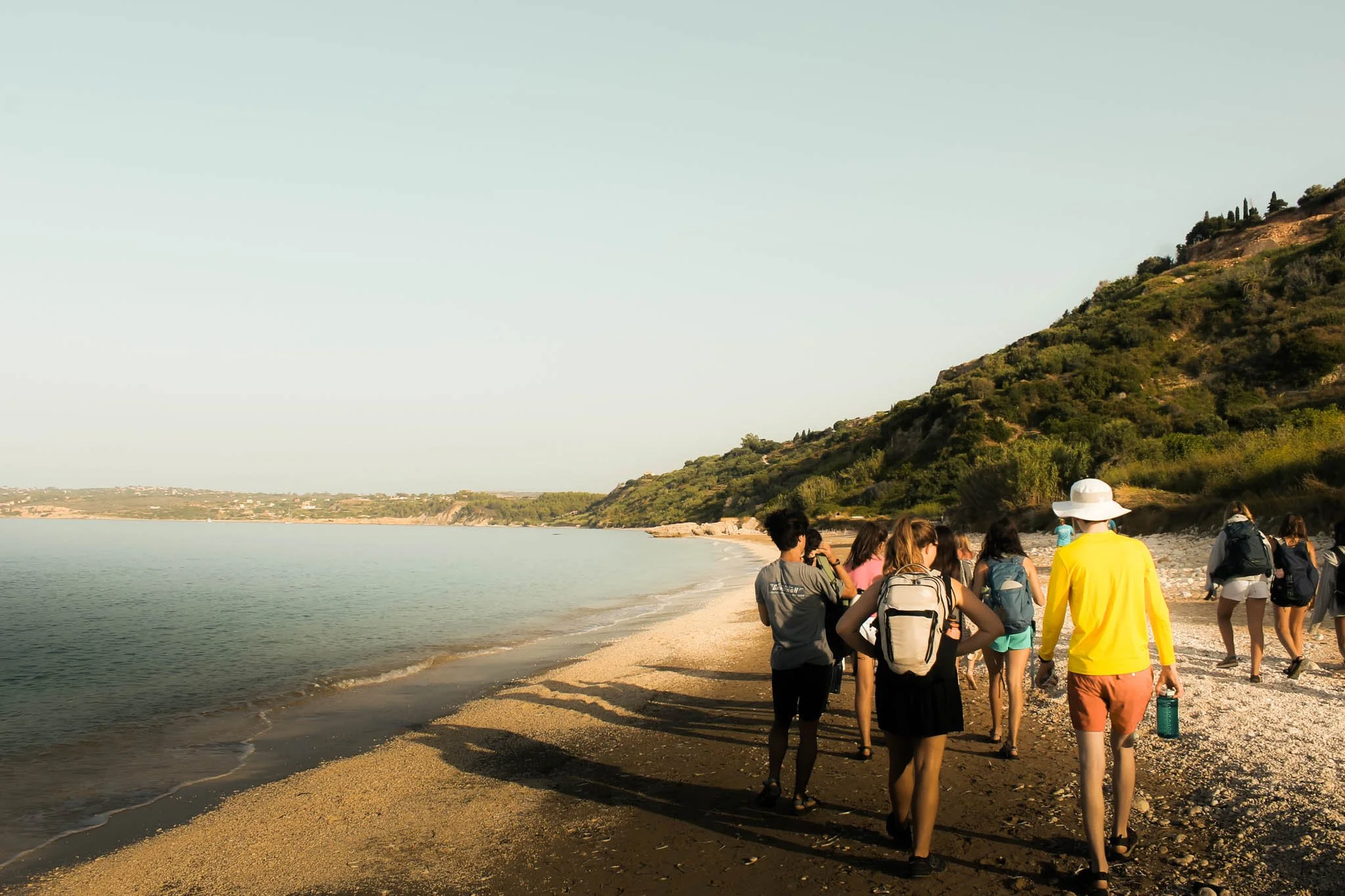
Greece: Coastal Conservation is a 16-day high school trip through Athens, Lefkada, and Kefalonia.
The trip starts with Greek history in Athens, then moves into a four-day sea kayaking expedition through the Ionian Islands. The second half is based around turtle and marine conservation on Kefalonia, where students work with local scientists on beach surveys, harbor observation, seagrass snorkeling, and ecological data collection.
Here are three things families may not know before reading the full itinerary.
1. The conservation work lasts five full days
Days 10 to 15 are focused on turtle and marine conservation on Kefalonia.
Students spend five full days working with local scientists. Early mornings are spent surveying beaches to identify and monitor nests. Afternoons may include observing turtles in the harbor, snorkeling over seagrass meadows, and collecting ecological data.
Alongside the fieldwork, students learn about turtle biology, marine ecology, and conservation methods.
This is not a one-afternoon volunteer stop. The conservation work is a central part of the trip, and the itinerary gives students enough time to learn the routine, ask better questions, and understand why the details matter.
The Greece trip includes 20 to 30 service hours.
2. Students spend four days sea kayaking the Ionian Islands
Days 5 to 8 are the sea kayaking expedition.
Before launching, the group transfers to Lefkada and meets the sea kayaking guides for equipment checks, gear organization, and expedition prep.
Then students spend four days paddling around the Ionian Islands, camping on remote beaches, snorkeling along the coastline, and exploring hidden coves and caves. The itinerary includes places like Skorpios and Thilia, plus massive sea caves used during World War II.
Each night, the group cooks meals over a beachfire and sleeps under the stars.
This is the stretch where students start to understand island travel differently. They are not only visiting beaches. They are moving by boat, packing gear, cooking together, camping near the water, and waking up ready to paddle again.
3. Athens gives the trip historical context before the island work begins
Days 1 to 3 are in Athens.
Students fly overnight, arrive on Day 2, meet their leaders, transfer to the group’s lodging, and take a walk through the city for a first glimpse of the Acropolis.
Day 3 is a full day in Athens. The group visits the Acropolis with a local guide, learns about Greek history, walks through the Plaka neighborhood, and has dinner at a traditional Greek taverna.
That first section gives the trip a cultural anchor before the group heads west toward Lefkada and Kefalonia.
The heart of the program is still conservation and island life, but Athens helps students understand that they are moving through a place with a long, layered history before they begin the sea kayaking and marine fieldwork.
What families should know before applying
Trip length and grade range. This is a 16-day trip for high school students completing grades 9 to 12.
Service hours. 20 to 30 hours of service work.
Location. The trip travels through Athens, Lefkada, and Kefalonia.
Travel. Families book flights to and from Athens, Greece. Do not book flights until RLT sends the official travel window.
Internal flight. There is one additional internal flight from Kefalonia to Athens. RLT books this on behalf of the group and applies the charge to a final invoice.
Escorted flight option. An optional group flight with an RLT leader is available from the New York area.
Accommodations. Students spend most of the trip camping in tents at coastal campsites and beaches. In Athens, the group stays in an Airbnb-style private home for two nights at the start and a hotel for one night at the end.
Sleeping setup. Students sleep in shared tents, 2 to 4 per tent, organized by gender. In the Airbnb-style home and hotel, rooms are shared and divided by gender.
Bathrooms and showers. Campsites are basic, with access to toilets and short showers. Showers are available every 1 to 2 days.
Food. Meals are eaten as a group. The group often eats at local cafes and restaurants, with some opportunities to cook together. Students rotate through helping prep meals and clean up. Expect foods like Greek sandwiches, gyros, pasta, burgers, and grilled vegetables.
Snorkel gear. Students are asked to bring their own snorkel gear for this trip. Expect this is because many people have personal preferences, and it is gear students can continue using after the trip.
Packing. RLT recommends one checked soft duffel bag, not a rolling suitcase, plus a small carry-on backpack. Students bring personal clothing, toiletries, and individual camping gear such as a sleeping bag and sleeping pad. RLT provides group gear, including tents, cooking equipment, and specialized activity equipment.
Passport. A valid passport is required and must be valid for at least 6 months beyond the return date.
Trip insurance. Trip insurance is required for international programs.
Phones. This program is phone-free. Leaders collect phones and personal electronics on Day 1 and return them at the end. Digital cameras and GoPros are welcome as long as they do not connect to the internet.
Questions families often ask
Does my teen need kayaking experience?
Prior kayaking experience is not listed as required. The group meets sea kayaking guides before the expedition for equipment checks, gear organization, and preparation. Students should be ready for active days on the water and close instruction.
Does my teen need to be comfortable in the water?
Yes. The itinerary includes sea kayaking, snorkeling, swimming, and marine fieldwork. If water comfort is a concern, talk with us before enrolling so we can help you think through fit.
What kind of service work do students do?
Students work with local scientists on turtle and marine conservation. Expect beach surveys to identify and monitor nests, turtle observation in the harbor, seagrass snorkeling, and ecological data collection.
Where do students sleep?
Students sleep mostly in tents at coastal campsites and beaches. The group also stays in an Airbnb-style private home in Athens at the start and a hotel in Athens at the end.
Why do students need their own snorkel gear?
We ask students to bring their own snorkel gear because many people have personal preferences, and it is something they can use again after the trip.
How to talk to your teen about this trip
Before they go, you might say:
“You’ll start in Athens, then spend four days sea kayaking through the Ionian Islands and camping near the water. After that, you’ll work with local scientists on sea turtle and marine conservation in Kefalonia. You’ll be off your phone, helping with group responsibilities, and spending a lot of time outside and on the water.”
After they come home, ask:
“What did the morning beach surveys involve?”
“What did you notice while snorkeling over the seagrass?”
“What was it like camping during the kayaking expedition?”
“What did you learn from the local scientists?”
“What do you remember most from Athens?”
Explore the Greece trip
For dates, tuition, itinerary, accommodations, packing details, paperwork, and the technology policy, see the full Greece itinerary.